Molds
Precast Mold RFQ Checklist: Compare Quotes and Confirm Embedded-Part Interfaces
Compare precast mold quotes with a practical RFQ checklist, embedded-part responsibility schedule, and agreed trial-fit and first-article evidence.
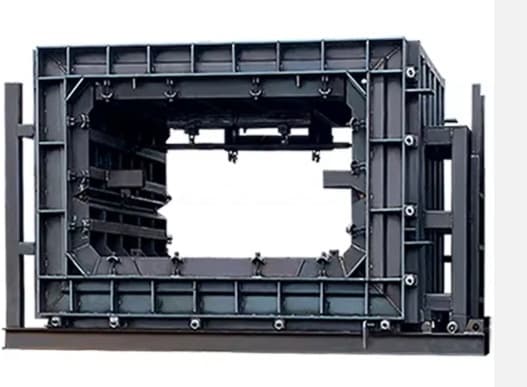
To get comparable precast mold quotations, give every supplier the same drawing register, production quantities, tooling list and acceptance requirements. Require a line-by-line response that separates permanent embedded hardware from reusable locating fixtures and names who designs, supplies, installs and checks each interface. Resolve exceptions before releasing fabrication.
A price headed “complete mold” leaves too much open. One supplier may include insert holders and a factory trial assembly; another may price the steel forms alone. The schedules below help a buyer expose those differences in a request for quotation (RFQ). For the underlying mold engineering questions, see Custom Precast Mold Technical Risks.
Set one quotation basis
Identify the element families, piece marks, geometry variants, quantities and intended production sequence. State how many molds and changeover sets are required, and describe the existing casting bed, fixing system, vibration arrangement and available working space.
Issue a sheet-level drawing register with document number, revision, date and purpose. Confirm units, governing dimensions, reference datums, casting face and handedness. Identify which document controls if the model and drawing disagree. Ask suppliers to list missing information rather than scale a PDF or silently choose a dimension.
NPCA's shop-drawing guidance highlights the importance of clear views, dimensions, opening locations and embedded hardware. It also describes how different viewing directions can confuse mold setup. Include a marked orientation view in the RFQ where that risk exists.
Label unresolved details and any quotation assumptions. A package suitable for budgeting may still need technical decisions before fabrication.
Keep permanent hardware and locating tooling separate
A cast-in plate, channel, sleeve or anchor remains in the concrete element. A holder, jig or locating fixture generally returns to the production cycle. Recess formers and other accessories need their own lines because their reuse and supply arrangements vary.
For each item, ask whether the offer includes the permanent component, its positioning device, or both. Separate quantities per element from quantities per mold set and from spare quantities. State the specified component reference and any proposed substitute explicitly.
The tooling must accommodate the approved hardware and reinforcement layout. Anchor capacity, lifting arrangements and permissible relocations cannot be selected from this purchasing checklist. Those decisions belong to the responsible competent designer under the applicable project requirements.
Send a quotation response sheet
Copy this sheet for each supplier. Add the supplier name, quotation number, revision, date, currency and validity at the top. Replace the requirement prompts with your project information before issue.
Use “included,” “excluded,” “optional” or “not stated” in the response column. Every amount needs a quantity, unit and quotation-page reference; use a separate line for each priced option. A blank or “not stated” is an unanswered question, not a zero cost or an assumed inclusion. If a material cost remains unknown, mark the comparison incomplete.
| RFQ line | Buyer requirement | Supplier response | Amount and source | Exception or action |
|---|---|---|---|---|
| Drawing basis | Register and revisions | ___ | ___ | ___ |
| Engineering scope | Drafting, design, review | ___ | ___ | ___ |
| Main tooling | Mold IDs and quantities | ___ | ___ | ___ |
| Variants | Changeover sets and parts | ___ | ___ | ___ |
| Permanent embeds | Item IDs and quantities | ___ | ___ | ___ |
| Locating tooling | Fixture IDs and quantities | ___ | ___ | ___ |
| Other accessories | Recess formers, seals, spares | ___ | ___ | ___ |
| Verification | Trial fit, casting, records | ___ | ___ | ___ |
| Delivery | Packing and named destination | ___ | ___ | ___ |
| Site work | Unloading, assembly, commissioning | ___ | ___ | ___ |
| Handover | Manuals, drawings, training | ___ | ___ | ___ |
| Commercial terms | Milestones, warranty, changes | ___ | ___ | ___ |
For delivery, record the agreed transport boundary and who pays each excluded cost. For scheduling, require the supplier's lead-time start condition and dependencies. Clarify drawing ownership and the formats handed over. Keep buyer-estimated missing costs visibly separate from supplier-confirmed amounts.
Request a revised offer that closes material exceptions, then compare the same scope and quantities. Keep optional equipment outside the base comparison until a purchase decision includes it.
Allocate each embedded-part interface
Use one technical record per item-location combination, linked to its piece mark and locating fixture. This avoids treating several differently oriented occurrences as one undifferentiated quantity.
| Technical record | Information to enter |
|---|---|
| Identity | Item ID, piece mark, function, quantity |
| Specification | Manufacturer/model or drawing revision; material and coating |
| Position | Datum, location, orientation, projection or recess |
| Mating interface | Receiving part, connection detail and drawing revision |
| Coordination | Reinforcement/cover review and unresolved clashes |
| Control | Approval status and supporting record references |
Attach the following responsibility table to each record. Replace every blank with an agreed organization or team and a named lead. State separately who approves substitutions or deviations and who authorizes release.
| Item | Design owner | Supply owner | Installation owner | Inspection owner |
|---|---|---|---|---|
| Permanent embed | ___ | ___ | ___ | ___ |
| Locating fixture | ___ | ___ | ___ | ___ |
| Mating hardware | ___ | ___ | ___ | ___ |
Specify the installation stage, such as pre-pour placement or site connection, and the inspection deliverable. If a task is “by others,” identify that receiving package and confirm its acceptance of the task. High Concrete's connections guide illustrates why supply and installation can belong to different parties. Its details are manufacturer-specific, not universal connection designs.
Separate drafting from engineering responsibility. NPCA's shop-drawing Q&A distinguishes reproducing an approved detail from making structural design judgments. Agree the engineering scope and any required professional review or seal for the project's jurisdiction and contract.
Write the acceptance basis before ordering
Treat tooling dimensions, finished-element dimensions, embed placement and mating interfaces as separate checks. For each critical feature, record the requirement source and edition, datum, permitted deviation, measurement method and stage, required evidence, and acceptance authority. Confirm that the checks are coordinated across adjoining packages. Avoid a single blanket tolerance for every feature.
PCI's public listing for PCI 135-25 states that its tolerances supersede those in MNL 135. The official FAQ identifies a chapter covering fabricated embeds and erection hardware. These public descriptions do not provide the full acceptance provisions. The responsible technical team should verify the relevant requirements in the applicable edition.
PCI and NPCA are U.S.-based references. Confirm the project's jurisdiction, adopted standards, certification obligations and contract documents before using them as acceptance criteria elsewhere. A publication date alone does not establish the requirements for a particular purchase.
Release fabrication with a first-setup evidence plan
Before release, close geometry queries, coordinate the embed records, agree the drawing status and name the release authority. Record the disposition of every exception. Later changes need an identified revision, affected tooling and pieces, commercial impact, approval and any required reinspection.
Agree the evidence before the first setup:
- Tooling measurements against the released drawings and datums
- Trial fit of the specified hardware, holders and agreed mating parts
- Pre-pour checks of item identity, orientation and coordinated placement
- Trial-cast or first-article measurements at the agreed stage
- Dated photographs tied to piece marks, plus nonconformance dispositions and acceptance records
Specify who supplies trial hardware, attends checks and accepts the records. Agree any post-delivery reassembly checks. Passing a tooling inspection does not establish concrete performance or safe lifting; those require their own applicable controls.
For help framing a mold RFQ, send a technical question to PRECAST.WORLD. Include element drawings, the revision register, production quantities, embedded-item records and the quotation differences you need clarified.