Technical Articles
Before Buying Truck Slump Telemetry for Precast Supply: A Pilot-Evidence Checklist
Plan a truck slump telemetry pilot for precast supply with reference tests, load IDs, addition records, offline checks, exports and clear support ownership.
Before buying truck-slump telemetry for ready-mix delivered to a precast plant, ask the supplier to demonstrate a complete load record under normal and failed-connection conditions. The purchasing decision should rest on evidence from your trucks, mix families and receiving workflow. Keep the pilot's commercial acceptance separate from the plant's decision to accept concrete.
A March 2024 public forum question asked about live truck-slump uploads and users among precast producers in Toronto or Quebec. For a buyer evaluating that capability, the procurement question is: can a supplier show a comparable installation and explain how the receiving team uses its records?
Define the decision before selecting the hardware
Choose the receiving problem the pilot is meant to address. Perhaps staff need earlier visibility of a delivery exception, a clearer record of additions, or a reliable way to compare incoming loads. State who needs the information, when it must arrive and what that person is authorized to do with it.
Ask which truck configurations and mix families the supplier supports, including operating limits and exclusions. Record the equipment, software and calibration versions proposed for the pilot. A demonstration on a different fleet is background evidence; the pilot still needs to cover the agreed conditions at your plant.
Functions described in marketing material need this same scrutiny. In its September 2024 release, Command Alkon described transmitting per-load sensor data, including slump and water additions, to Command Cloud. That is a vendor capability claim. It provides no independent proof of accuracy or suitability for a particular precast supply arrangement.
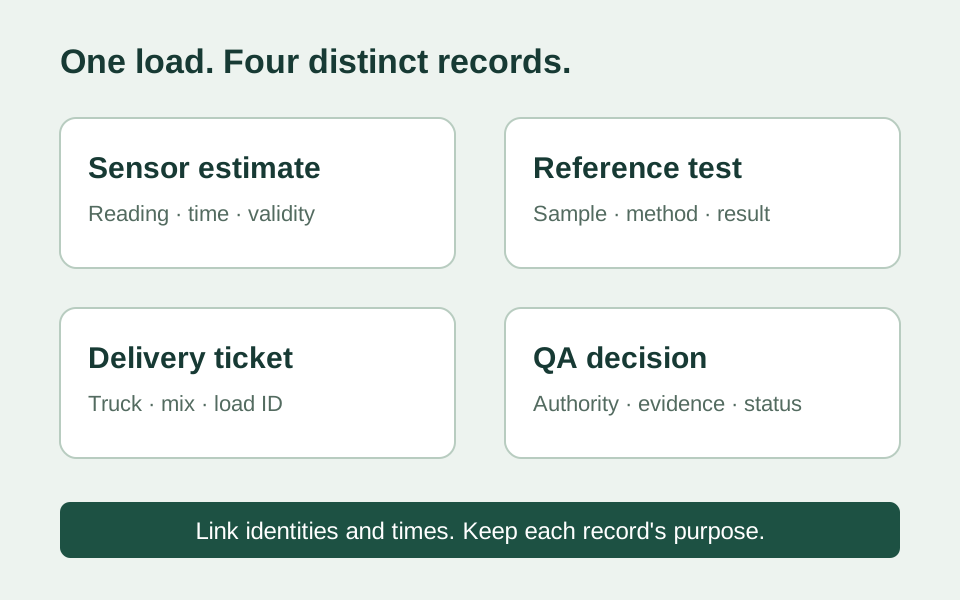
Keep four records distinct
Specify how these records will link together without losing their meaning:
- Sensor estimate: the system's reported slump value, with units, timestamp, equipment identity, configuration and validity status.
- Contract reference test: the result obtained using the sampling and test method required by the applicable specification, with its own sample identity and timing.
- Truck or batch ticket: the delivery record used to connect the supplier, mix, truck and load to the plant's receiving records.
- QA acceptance: the decision made by authorized personnel under the governing requirements, with the evidence and any exceptions recorded.
The pilot agreement should identify which decisions each record can support. Project-required tests remain in place. Have the responsible QA team confirm the reference method and acceptance authority before collecting comparison data.
The NRMCA materials FAQ explains that acceptance samples are intended to represent delivered concrete and that tests establish compliance with project requirements. It also describes automated slump-estimating systems and the need to retain addition records. This explanatory guidance does not approve a named device for a particular contract.
Agree on the comparison before collecting results
Write down the trucks, mix families and operating conditions to be covered, the reference testing arrangements and the evidence needed to finish the pilot. Let the responsible technical parties agree on meaningful comparison criteria and measurement limitations. Avoid importing a generic precision tolerance from an unrelated installation.
For each paired comparison, retain the sensor reading's time and the sample and test times. Record the location or delivery stage and whether an addition occurred between them. These details let reviewers decide whether the two results are meaningfully comparable. Review missing and invalid readings alongside successful ones, and keep exclusions visible in the final report.
Use a demonstration checklist
Agree on the named owners before the trial. Each row should produce a record the buyer can inspect afterward.
| Demonstration | Evidence to retain | Owner to name |
|---|---|---|
| Normal delivery | Trace a load from dispatch through receipt using linked load, truck, mix and ticket IDs. | Supplier and receiving lead |
| Reference comparison | Paired readings, units, sample/test IDs, times, location and agreed comparison outcome. | QA lead |
| Clock and identity checks | Show timestamp meaning, time zone, synchronization and correction of a wrong load association. | Integration lead |
| Addition history | Show water/admixture event time, type, amount, source and authorization record where applicable. | Producer QA lead |
| Offline operation | Show what is stored, displayed and recovered; preserve event times, upload times and remaining gaps. | Supplier technical lead |
| Invalid reading or device error | Show fault status, alert recipient and the plant's approved fallback workflow. | Supplier and receiving lead |
| Export and revisions | Open a usable export; retrieve an earlier load and show original versus corrected records. | Data owner |
| Calibration and replacement | Identify version history, required checks, maintenance duties and return-to-service responsibility. | Named service owner |
| Commercial scope | Confirm included work, recurring charges, exclusions, data access and end-of-pilot arrangements. | Buyer and supplier |
Arrange supplier-led fault and recovery demonstrations under an approved test plan that protects live receiving operations. Ask what staff will see when the last available reading is old. A recovered upload should remain distinguishable from information that was available at the time of receipt.
Close the support and commercial gaps
Support belongs in the purchase scope. Command Alkon's public app documentation describes tablet-to-truck hardware communication, connection status and diagnostic support. Treat such documentation as a prompt to establish responsibilities with any supplier. Confirm who handles cleaning-related checks, calibration, device replacement and troubleshooting, and verify the proposed service coverage for your location.
The quotation should state pilot duration, covered trucks, installation work, training, connectivity, software charges, integration, support and removal or continuation arrangements. Confirm who owns the records, who can access them, retention terms, export scope and access after the pilot ends. Request a sample export before committing.
Finish with a decision tied to the agreed evidence: proceed within the demonstrated scope, extend the trial to resolve specific gaps, or decline. Record unresolved limitations and their owners. Neither a successful demonstration nor a purchase changes the plant's concrete acceptance requirements.
Need help framing the supplier discussion? Bring your fleet and mix context, governing requirements, proposal scope and a non-confidential sample export to the PRECAST.WORLD technical desk.