United States / Precast earnings
L.B. Foster's Precast Sales Rose 9%. Its Backlog Moved the Other Way.
L.B. Foster reported $47.1 million in third-quarter precast sales, 9% above a year earlier. Precast orders grew, yet its backlog fell 11.7% year over year—a useful reminder that shipments, bookings and remaining work are not interchangeable.
For a precast manufacturer, a good sales quarter and a shrinking order book are not necessarily contradictory. L.B. Foster's results for the three months ended September 30, 2026 provide a recent example of why factory operators, customers and suppliers should look beyond one number when judging the market.
The company reported $47.1 million in Precast Concrete Products sales, compared with $43.3 million in the corresponding quarter of 2025. That is an increase of $3.9 million, or about 9%. The result sits within its broader Infrastructure Solutions division, which also contains Steel Products. The two product lines should not be combined when describing the performance of its precast business.
More sales and more bookings, but less work left in the queue
Foster's Form 10-Q says precast net new orders rose 29.5% in the quarter compared with the prior-year quarter. At the same time, the company's September 30 precast backlog was 11.7% below its year-earlier level. Those percentages are both company-reported precast measures; the filing does not disclose the precise precast-only dollar amounts in this discussion.
It would be too simple to call the lower backlog a collapse in demand. Revenue records work performed; new orders capture commitments entered during the period after cancellations; backlog measures remaining contractual commitments not yet fulfilled. All three move on different clocks. An increase in orders in one quarter can coexist with a smaller backlog if deliveries, contract timing or order composition differ from the earlier period. The filing alone does not establish which factor dominated.
A regional market, not a universal precast cycle
The larger Infrastructure Solutions division recorded $65.1 million in third-quarter sales, up 7.6%. Its gross profit was $14.2 million, an increase of 6.9%, while its gross margin edged down from 22.0% to 21.9%. Management attributed the gains in both precast and steel gross profit to higher volumes. But these are division-level profitability figures: the filing does not identify a standalone precast gross margin. Applying the 21.9% margin to precast sales would be a category error.
The company's other quarter-end figures point in different directions too. Across the entire Infrastructure Solutions division, new orders reached $68.7 million and backlog was $108.3 million. Those totals include steel products, whose net new orders rose sharply from a comparison quarter affected by order cancellations. Treating the division's orders or backlog as if they belonged entirely to concrete products would produce a misleading picture.
For manufacturers planning capacity, these distinctions are operational rather than academic. A booked contract does not automatically say when moulds will be occupied, how many units will ship, or whether a plant needs another line. A customer assessing delivery risk should look for the product-specific capacity and delivery schedule, not just a group-wide backlog figure. Suppliers to precast factories should care about the timing and mix of orders as much as aggregate market growth.
Why the next comparison will be harder
The same filing records a transaction after the reporting quarter: on October 28, Foster acquired operating assets from Dulworth Enterprises' residential wastewater precast business, including its Aeris aerobic treatment systems platform. The approximately $52.2 million acquisition was completed after September 30, so it is not part of the third-quarter sales or backlog comparison discussed above. It will, however, complicate future year-on-year readings as the business mix changes.
That timing matters. In the next reporting periods, a rise in consolidated precast sales could reflect an acquired operation as well as underlying demand at established factories. Without a bridge separating acquired sales from existing operations, readers should resist interpreting every dollar of growth as organic shipment volume.
Foster's latest figures therefore present a specific, not universal, signal: precast sales and recent order intake increased, while the remaining precast backlog ended the quarter below the prior-year level. The numbers offer evidence of continuing activity, not a guarantee of uniform strength across every region or product family. Watching whether precast backlog stabilizes alongside reported sales will be more informative than choosing just one headline figure.
Primary documents: L.B. Foster's Form 10-Q, quarter ended September 30, 2026 and company earnings release dated November 4, 2026. Analysis by James Cheng for PRECAST.WORLD.
Source context
Source: L.B. Foster Company, November 4, 2026 Form 10-Q and earnings release. Open the original publication for dates, figures and full context.
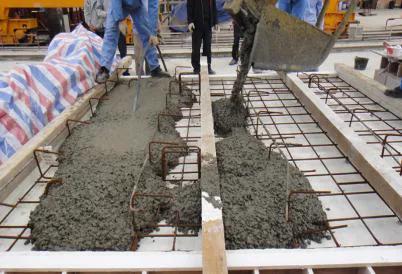
Illustrative authorized archive photograph only. Financial results and order commentary come from L.B. Foster's SEC filing and November 4 earnings release.
View original sourceRelated technical reading
Connect this development with production methods and product requirements
The related article and product references cover production variables, plant interfaces, product scope and field records relevant to this development.