Technical Articles
Precast Parking Garage Bearing Pads: In-Service Condition Assessment and Distress Evaluation
Audit precast parking structure double-tee bearing pads, evaluate walking and crushing distress mechanisms, and compile field data for engineering review.
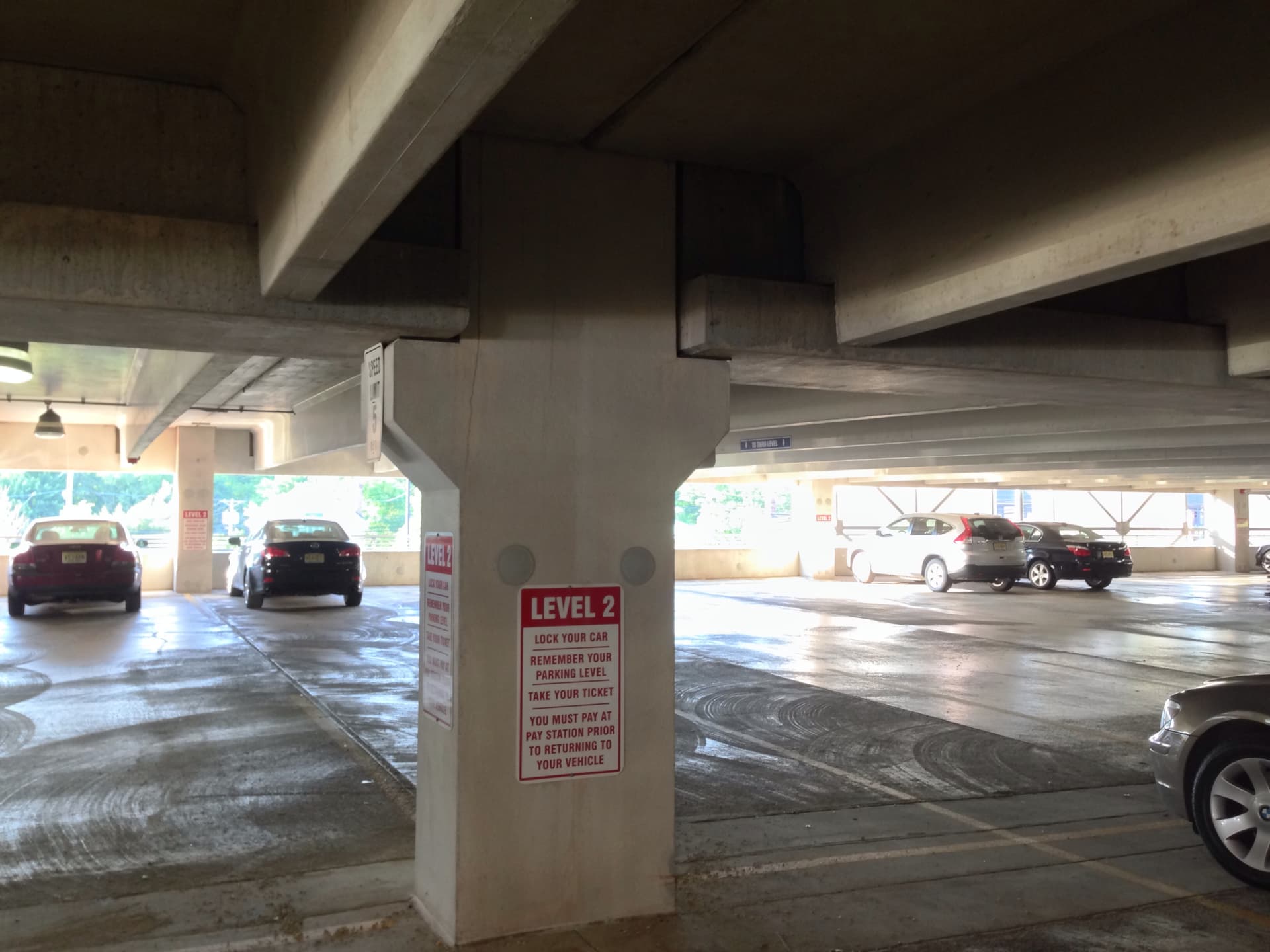
Inspecting elastomeric bearing pads beneath precast double-tee stems requires evaluating physical condition, load transfer, and seat geometry before recommending maintenance actions. When a pad shows displacement, distortion, or wear during a walk-through, facility teams face an assessment task rather than an immediate repair decision. Determining the significance of observed distress requires gathering measured field data and structural drawings for engineering evaluation.
Editorial notice: This guide outlines condition assessment and field data-collection criteria for facility audits. Structural evaluations, capacity calculations, and repair specifications should be referred to a licensed professional engineer.
Why garage bearing pads experience severe wear
In The Construction Specifier, Doris Eichburg, Beth Anne Feero, and David Nicastro documented how bearing pads function as buffers between precast components in parking garages, accommodating thermal movements and member rotations to prevent concrete cracking and spalling. Vehicle traffic introduces repetitive movement, noise, and vibration that bearing pads must absorb or transfer. The authors documented key distress mechanisms:
- Slippage and walking: When an elastomeric bearing pad is loose-laid without mechanical attachment or adhesive bonding, it is restrained only by the dead weight of the supported precast member. Bearing pads can migrate outward through incremental one-way movement because thermal expansion and contraction cycles produce unequal forces, especially when the bearing substrate is not parallel to the double-tee stem ends. On exposed upper parking levels, solar heating can induce upward thermal camber that reduces the normal load resting on the pads, facilitating outward walking. When a bearing pad becomes damaged or walks out of position, the double-tee stem end or its supporting concrete ledger can crack or spall.
- Crushing and tearing: Under high compressive loads or where pad dimensions are inadequate, bearing pads can crush or tear over time. When applied compressive stresses significantly exceed material capacity, an elastomeric pad first spreads outward and then tears. Non-uniform bearing caused by member camber, component misalignment, or irregular seat surfaces can concentrate point loads that cause localized pad crushing.
- Environmental degradation: Atmospheric ozone degrades natural rubber and many synthetic elastomers by breaking carbon-carbon double bonds along the material surface.
- Historical material context: In their 2015 study, Eichburg, Feero, and Nicastro reported that random-oriented fiber (ROF) products were the most widely used bearing pads in parking garages, engineered with synthetic fibers to deliver high compressive strength.
The visual inspection challenge: why pads hide internal distress
In published parking structure maintenance guidance, the PCI Midwest Chapter recommends inspecting all elastomeric bearing pads annually in the spring. Routine condition surveys can be deceptive because bearing pads can sometimes appear serviceable from the front and side while suffering internal tearing or crushing beneath the stem, as documented in The Construction Specifier.
In one forensic investigation described in the study, lifting a double-tee stem revealed that a pad appearing sound from exterior edges was crushed toward the rear of the beam because the concrete support sloped inward. Eichburg, Feero, and Nicastro recommend that inspectors measure the in-service bearing length of the pad and compare the contact dimension against design capacity.
Engineering evaluation and repair considerations: risk comparison before action
When a bearing seat is out of level, solid shims can be installed beneath the bearing pad to reduce excessive non-uniform loading that causes premature bearing failure, as noted in The Construction Specifier. Whether leveling shims, bearing pad replacement, or continued monitoring is appropriate remains a project-specific decision for the engineer of record.
Parking structure maintenance guidelines from the PCI Midwest Chapter note that structural repairs may include the removal and replacement of bearing pads under the oversight of a qualified engineer. Crucially, replacement is not an automatic reaction. Because lifting operations introduce a significant chance of causing structural damage, bearing pad replacement should only proceed after evaluating the relative risk of leaving failed pads in place against the hazards of lifting.
The engineer must evaluate inaccessible conditions and operational demands rather than assuming lifting or monitoring is universally preferable. As Eichburg, Feero, and Nicastro emphasized, because every garage is unique, the actual scope of bearing pad repair work should be designed for each project by a licensed engineer.
Condition assessment register for engineering review
Use this register during condition audits to document observable distress and organize questions for the engineer of record. All dimensions must come from existing structural records or visual observations conducted under engineer-approved safe access. Inaccessible or concealed bearing conditions must be recorded as unknown rather than assumed.
| Field observation | Visual record & safe field data | Relevant records & uncertainties | Engineering evaluation question |
|---|---|---|---|
| Pad walking along ledger | Photo offset; record visible ledge margin and pad projection from approved access | Shop drawing bearing details; concealed rear seat contact remains unknown | Does remaining contact area support design reactions? |
| Elastomeric bulging or edge tearing | Photo edge tears; record visible bulging width from approved access | Specified pad thickness; internal tearing beneath stem remains unknown | Does visible distress indicate material overload or section loss? |
| Non-uniform pad compression across visible edges | Photo thickness variation; record seat slope from approved vantage | Design bearing elevations; rear bearing thickness remains unknown | Does uneven loading threaten localized pad crushing or concrete distress? |
| Concrete cracking or spalling at bearing seat | Photo crack patterns and spall depth; record dimensions from approved access | Ledger reinforcement detailing; hidden cracking beneath stem remains unknown | Has localized concrete distress reduced effective bearing area? |
| Displaced, unseated, or missing bearing pad | Photo stem position; note elevation drop from approved vantage | Original placement drawings; connection stability remains unknown | Does loss of bearing support warrant temporary shoring or further investigation? |
Evaluating structural intervention risks: what the engineer of record assesses
When evaluating bearing pad replacement, structural lifting introduces technical risks requiring engineering analysis. In their 2015 article in The Construction Specifier, Doris Eichburg, Beth Anne Feero, and David Nicastro reported that there was little published guidance and no industry standards governing how to replace bearing pads in precast concrete parking garages.
The authors cautioned that structural damage can occur when lifting operations are performed incorrectly. Because lifting introduces structural risk, evaluating intervention requires comparing those hazards against leaving damaged pads in service. Auditors should compile existing records to help the engineer address open baseline questions:
- Existing structural condition records: What baseline crack maps or inspection logs exist for stems, topping slabs, and adjacent framing to determine if distress predates any proposed intervention?
- Restraint and continuity records: What drawings identify welded flange connectors, diaphragm ties, or boundary details that restrict vertical movement or influence member stability?
- Support and seat geometry records: What records document support geometry, seat levelness, and whether ledger beams possess verified rotational restraint?
- Safe physical access records: What documentation confirms whether bearing seats can be inspected from safe, engineer-approved locations without physical intervention?
What to compile for an engineering condition evaluation
Before deciding whether to monitor, shim, or replace bearing pads, compile an organized evaluation dossier for the engineer of record:
- Framing plans, general notes, and shop drawings showing design reactions, pad details, and connections.
- Field inspection logs recording visible pad thickness, exposed ledge margins, and walking offsets from approved access.
- Photographs capturing visible pad edges, extruded elastomer, and concrete distress.
- Geometric survey data documenting support seat levelness, beam alignment, and camber.
- Connection inventory identifying welded flange connectors, diaphragm ties, or boundary restraints.
For assistance organizing condition survey data into a structured review package, submit your records to the PRECAST.WORLD technical desk. Organizing photographs, measured dimensions, and structural drawings helps clarify technical questions for engineering review, while repair specifications, capacity analyses, and structural determinations remain under the direction of your project's licensed engineer.