Technical Articles
Prestressed Concrete Railway Sleepers: Types, Fastening Interfaces and Inspection
A technical product reference for sleeper families, rail-seat and fastening interfaces, prestressing, production controls, dimensional inspection and structural testing.
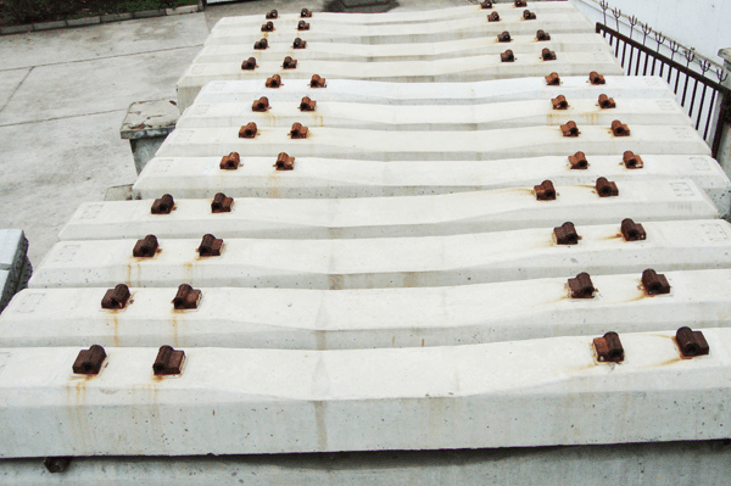
Technical summary
Prestressed concrete railway sleepers must be read as part of an approved track system. Product identity connects the sleeper drawing to track gauge, rail section, rail-seat inclination, fastening shoulders or inserts, prestressing layout, support conditions, production records, dimensional inspection and the structural test arrangement. GB/T 37330-2019 is the current Chinese national reference for concrete sleepers in ballasted track and is under revision through plan 20252582-T-347.
Field notes
Prestressed Concrete Railway Sleepers: Types, Fastening Interfaces and Inspection operating variables
Prestressed concrete railway sleepers must be read as part of an approved track system. Product identity connects the sleeper drawing to track gauge, rail section, rail-seat inclination, fastening shoulders or inserts, prestressing layout, support conditions, production records, dimensional inspection and the structural test arrangement. GB/T 37330-2019 is the current Chinese national reference for concrete sleepers in ballasted track and is under revision through plan 20252582-T-347.
Parameters to verify
- Identify the track system, sleeper designation, gauge, rail section, fastening assembly and service class before comparing products.
- Separate monoblock ballasted sleepers, turnout or bridge sleepers, elastic sleepers and twin-block ballastless sleepers by their governing interfaces.
- Control rail-seat geometry, shoulders, inserts, dowels, tendon position, prestress transfer and end-zone condition as one design package.
- Link dimensional inspection, static crack resistance, fatigue evidence and product marking to the same sleeper type and production batch.
Records and inputs
- Approved sleeper drawing and designation
- Track gauge, rail section and fastening system
- Prestress and reinforcement schedule
- Production and curing records
Failure modes to watch
- The sleeper cannot be traced to one drawing revision.
- Rail-seat or fastening geometry is incomplete.
- Prestress transfer and curing evidence are missing.
Visual workflow
From sleeper identity to track-ready product evidence
The finished sleeper photograph shows product form and fastening interfaces; the complete evidence chain also connects the approved drawing, prestressing, concrete, dimensional checks, structural tests and protected handling.
Fix sleeper, track, rail and fastening-system identity.
Position tendons, reinforcement, shoulders, dowels and inserts.
Control concrete placement around rail seats and embedded parts.
Verify curing condition and detension in the approved sequence.
Measure geometry, surfaces, inserts and product marking.
Preserve static or fatigue arrangements and raw observations.
Stack, handle and dispatch without changing accepted condition.
Production context
A concrete sleeper is a track-system component whose geometry, fastening interface, prestress, rail-seat behavior and production records must match one approved design and one adopted standard set.
Field sequence
Technical method and evidence chain
Read each stage with the product definition, adopted standard, approved procedure and item-specific records.
1. Begin with the track system, not the concrete shape
A sleeper holds rail position, transfers wheel loads into the support system and provides the interface for fastenings, pads, insulators and ballast or slab support. Its identity therefore includes more than overall length and concrete strength.
The controlled drawing should state sleeper designation, track gauge, rail section, rail-seat arrangement, fastening system, service class, prestressing system and applicable standards. Product marking, mold setup, inspection record and test specimen must all resolve to that same identity.
- Record the sleeper designation and drawing revision with every production batch.
- Confirm the complete fastening assembly, not only the visible insert or shoulder.
- Keep gauge and rail-seat geometry in the same dimensional-control plan.
2. Product families create different structural and installation interfaces
Monoblock prestressed sleepers for ballasted track, turnout sleepers, bridge sleepers, wide sleepers, elastic sleepers and twin-block sleepers do not share one universal geometry or test envelope. Each family responds to a different track layout, support condition, load path and installation method.
Turnout sleepers vary in length and fastening position. Bridge sleepers can incorporate guard-rail details or different support conditions. Twin-block sleepers connect two concrete blocks through a steel lattice and become part of a ballastless track slab. Elastic sleepers add a resilient interface that changes product and system checks.
3. Fastening geometry is a primary product interface
Rail seats can use cast shoulders, embedded metal components, polymer dowels, threaded inserts or other proprietary fastening details. Their position, inclination, embedment, orientation and surrounding concrete affect gauge, rail restraint, insulation and long-term maintenance.
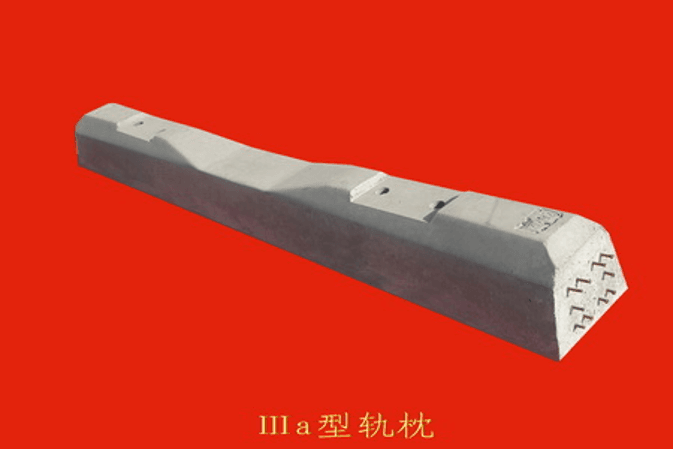
Chinese IIIa, IIIb and IIIc sleepers illustrate three established interface approaches: shouldered sleepers with reserved fastening holes, sleepers with embedded fastening shoulders, and sleepers with embedded polymer sleeves. These are configuration examples, not a universal international classification.
- Measure insert spacing and rail-seat relationship as a system.
- Inspect rotation, depth, damage and concrete consolidation around embedded parts.
- Protect threads, sleeves and bearing surfaces through casting, demolding and storage.
4. Prestress and section geometry control both rail-seat and center behavior
A monoblock sleeper is typically checked for positive bending at the rail seat and negative bending at the center, with the exact test sections and load arrangement defined by the adopted standard. Tendon pattern, prestressing force, eccentricity, transfer length and concrete strength at release shape this response.
The drawing should preserve section depth, width, rail-seat profile, end geometry, tendon cover and local reinforcement around inserts. A correct overall length cannot compensate for a rail-seat or tendon-position error.
5. Production is one controlled sequence
Mold cleaning and release preparation establish the bearing surfaces. Tendons, reinforcement and fastening components are positioned and checked before tensioning. Concrete placement and compaction must fill the rail seats, end zones and embedded-part regions without moving the inserts or tendons.
Curing must achieve the declared release condition before detensioning. The detensioning sequence, transfer method and lifting plan should limit shock, splitting and unintended bending. Mold identity, tendon batch, tensioning record, concrete batch, curing cycle and release result remain linked to the sleeper batch.
- Calibrate force and elongation measurement and reconcile both records.
- Check embedded components again after concrete placement where the process allows.
- Define release strength and detensioning sequence in the approved production procedure.
6. Dimensional inspection must reproduce the track interfaces
Inspection commonly covers overall dimensions, rail-seat spacing and inclination, fastening positions, local section geometry, straightness or twist, embedded-part condition, surface defects and product marking. The exact characteristics and tolerances come from the adopted product standard and drawing.
Fixtures should reference stable product datums and reproduce the intended track relationship. Record instrument identity, measuring points, orientation, raw readings and disposition. A single diagonal or overall dimension cannot demonstrate gauge-related geometry.
7. Static and fatigue tests require a traceable structural arrangement
Static crack-resistance and fatigue tests use defined support spans, loading points, load stages and observation criteria. Rail-seat and center tests represent different bending conditions and cannot be interchanged. The specimen identity and production history should stay with the raw test data.
Record support and load geometry, calibration, preload or seating steps, load-time history, crack observations, deflection or displacement readings, unloading response where required and final condition. A pass/fail statement without the arrangement and raw readings is weak technical evidence.
8. Storage and handling can change an accepted product
Sleeper stacks need aligned support points that match the approved handling method. Misaligned dunnage, uncontrolled fork contact, impact at rail seats or inserts and lifting from unapproved points can introduce cracking, chipping, twist or hidden fastening damage.
Dispatch records should preserve product type, batch, quantity, marking and observed condition. Site receiving should reconcile those records before installation and protect fastening interfaces from contamination or mechanical damage.
9. Keep historical product data in its proper boundary
Legacy drawings and factory manuals remain useful for recognizing product forms and interface evolution. They do not establish the current acceptance criteria for a new project.
For Chinese ballasted-track sleepers, GB/T 37330-2019 is currently listed as active and under revision. The controlled project standard, railway-authority drawing and approved fastening system decide the current design and inspection values.
Field photographs
What the record should show
Each image is tied to a specific production, test or acceptance interface; none is a generic placeholder.
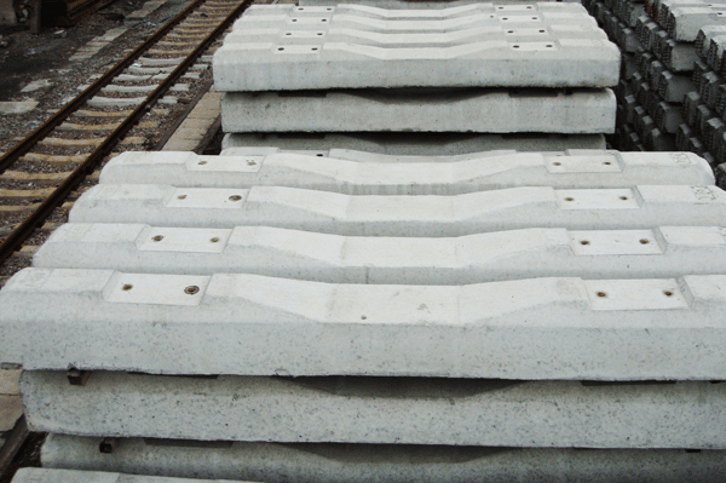
The rail-seat profile and insert-hole positions belong to one approved fastening and gauge geometry.
Protect inserts and rail-seat surfaces during stacking, transport and site receiving.Where this applies
- Ballasted conventional, passenger and freight railway track using monoblock prestressed concrete sleepers
- Heavy-haul, bridge, wide, turnout and other special sleeper designs governed by project or railway-authority drawings
- Twin-block and elastic sleeper systems where separate product standards and track interfaces apply
- Sleeper factories controlling molds, prestressing, concrete, curing, detensioning, inspection, storage and dispatch
Engineering variables
- Identify the track system, sleeper designation, gauge, rail section, fastening assembly and service class before comparing products.
- Separate monoblock ballasted sleepers, turnout or bridge sleepers, elastic sleepers and twin-block ballastless sleepers by their governing interfaces.
- Control rail-seat geometry, shoulders, inserts, dowels, tendon position, prestress transfer and end-zone condition as one design package.
- Link dimensional inspection, static crack resistance, fatigue evidence and product marking to the same sleeper type and production batch.
System interfaces
- Compare drawings through rail-seat, fastening, gauge and support interfaces rather than by overall length alone.
- Read mold, prestressing, concrete, curing and detensioning records against the declared sleeper design.
- Keep routine release inspection separate from type, static and fatigue testing.
Production evidence checklist
| Production variable | Why it matters in production | Records or evidence to inspect | Interface risk |
|---|---|---|---|
| Product identity | Connects one sleeper type to track gauge, rail section, fastening system, service class and drawing revision. | Approved drawing, product designation, marking system, batch record and track-system schedule. | A sleeper that looks similar can have incompatible gauge, fastening or structural details. |
| Rail-seat and fastening geometry | Positions rails, pads, insulators, shoulders, dowels or inserts as one assembly. | Fixture readings, rail-seat inclination, insert coordinates, embedment checks and component condition. | Local position or rotation errors can affect gauge, clamping, insulation and maintenance. |
| Prestressing system | Controls rail-seat and center bending response, cracking and release behavior. | Tendon identity, pattern, force, elongation, calibration, concrete release strength and detensioning record. | Force alone cannot show tendon position, loss, transfer condition or an incorrect detensioning sequence. |
| Concrete and curing | Develops the strength and durability needed for prestress transfer, handling and service. | Batch record, workability, placement time, curing temperature history, release result and specimen traceability. | A mature cube result may not describe the sleeper condition at prestress transfer. |
| Finished geometry | Reproduces gauge-related dimensions, rail-seat relation, section profile, straightness and twist. | Defined datums, inspection fixture, calibrated instruments, raw readings and disposition. | Overall dimensions can pass while the two rail seats remain geometrically incompatible. |
| Structural testing | Checks the declared rail-seat and center response under the adopted static or fatigue method. | Specimen identity, support and load geometry, calibration, staged readings, crack observations and final condition. | A result cannot be interpreted when the arrangement or specimen history is missing. |
| Handling and dispatch | Preserves accepted geometry and fastening interfaces until track installation. | Stacking plan, dunnage alignment, lifting method, condition photographs, batch and dispatch records. | Post-inspection impact or support misalignment can damage an otherwise acceptable sleeper. |
Technical references
Standards context for Prestressed Concrete Railway Sleepers: Types, Fastening Interfaces and Inspection
These references identify where a technical review often starts. They are not a declaration of compliance, product approval or a replacement for the adopted project code.
Sleeper for ballasted track - Concrete sleeper
Current Chinese national product standard for concrete sleepers used in ballasted track, effective 1 July 2019.
The official record shows a 2025 revision conclusion and active revision plan 20252582-T-347. Use the controlled current edition and project documents.View standard recordTest method for static crack resistance of prestressed concrete sleepers
Current Chinese railway-industry record for static crack-resistance testing of prestressed concrete sleepers.
The product standard and project documents determine whether and how this method applies to the sleeper type.View standard recordFatigue test method for prestressed concrete sleepers
Current Chinese railway-industry record for fatigue testing of prestressed concrete sleepers.
Use with the governing product specification, approved test arrangement and railway-authority requirements.View standard recordCRTS twin-block ballastless-track concrete sleeper
Current Chinese railway-industry product standard for CRTS twin-block concrete sleepers in ballastless track.
Applies to the stated twin-block system; it is not the product standard for monoblock ballasted-track sleepers.View standard recordConcrete elastic sleeper for railway ballasted track
Current Chinese railway-industry product standard for concrete elastic sleepers in ballasted track, effective 1 September 2023.
Use for the stated elastic-sleeper system rather than as a general monoblock sleeper specification.View standard recordTechnical references
Original sources and related manuals
Open the governing standard record, original process source or related product manual for the underlying scope and terminology.
Confirms the current ballasted-track concrete-sleeper product standard and its active revision status.
Open process referenceSAMRTB/T 1879-2002 static crack-resistance method recordOfficial record for the current Chinese prestressed concrete sleeper static crack-resistance test method.
Open process referenceSAMRTB/T 1878-2002 fatigue method recordOfficial record for the current Chinese prestressed concrete sleeper fatigue test method.
Open process referencePRECAST.WORLDRailway sleeper mold product manualConnects sleeper geometry, rail-seat features, insert position and production repeatability to the upstream steel mold.
Open process referenceWeiler GmbHPoles, piles and columns equipmentOfficial manufacturer reference for spun pole and pile molds, concrete delivery, cage welding, centrifugal spinning, curing and handling scope.
Open process referenceWeak assumptions seen in projects
- Treating every concrete sleeper as an interchangeable beam.
- Using a fastening shoulder, insert or dowel pattern that does not match the approved rail assembly.
- Copying historical dimensions or test loads into a different sleeper class.
- Stacking or lifting sleepers at locations that introduce unintended bending or edge damage.
Inspection and acceptance points
- The sleeper cannot be traced to one drawing revision.
- Rail-seat or fastening geometry is incomplete.
- Prestress transfer and curing evidence are missing.
- Test records do not identify the specimen and loading arrangement.
FAQ
Is GB/T 37330-2019 still current for concrete sleepers in ballasted track?
Yes. The official record lists it as current and shows that a revision was concluded in 2025, with revision plan 20252582-T-347 underway. Check the controlled standard record and project requirements before acceptance work.
Are IIIa, IIIb and IIIc sleepers universal international types?
No. They are established Chinese configuration examples distinguished mainly by fastening interfaces. Other railway systems use different sleeper designations, drawings and proprietary fastening assemblies.
Can one overall dimension confirm track gauge compatibility?
No. Rail-seat relation, fastening positions, insert orientation, rail-seat inclination and the approved gauge fixture must be checked together.
Does a static crack-resistance test replace routine dimensional and appearance inspection?
No. Product identity, dimensions, embedded components, surface condition, prestressing records and structural tests are separate evidence sets combined by the adopted inspection plan.
Need to frame the technical context?
Send product type, capacity target, standards, drawings, photos or quality issues. PRECAST.WORLD will turn them into clearer technical notes for the next discussion.