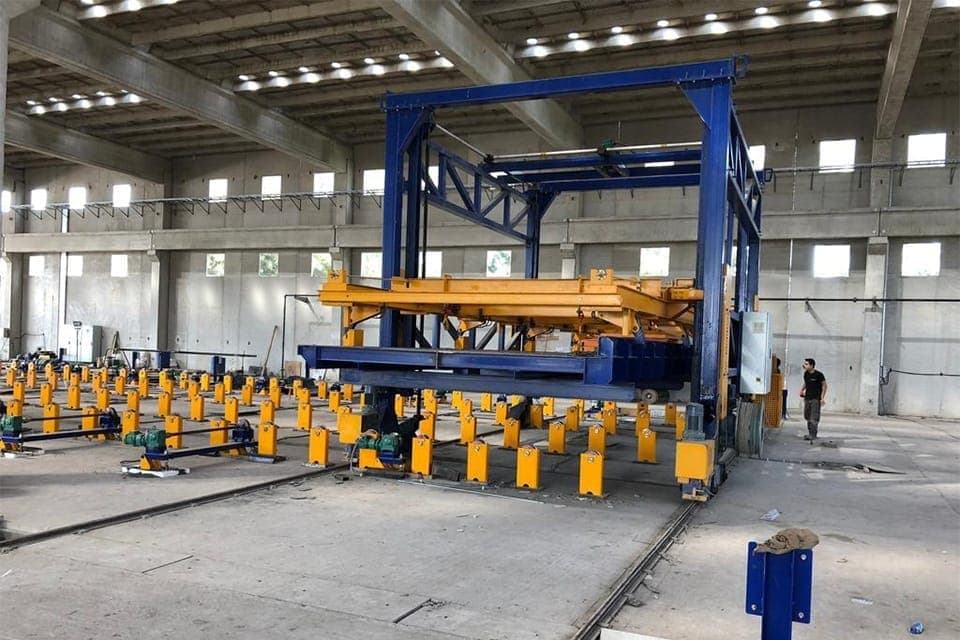
Equipment
Pallet Circulation System
A controlled pallet-line system that moves casting pallets through shuttering, reinforcement, concrete placement, curing, demolding and cleaning stations.
Pallet Circulation System should be selected around pallet size, cycle time, station count. Confirm use conditions, records and supplier data before comparing options.
A pallet circulation system moves molds or pallets through preparation, reinforcement, casting, curing and demolding stations. It suits repeated products and disciplined factory planning.
- High-volume wall panels
- Facade elements
- Sandwich panels
- Housing component plants
- Pallet size
- Cycle time
- Station count
- Curing rack capacity
Product photographs
Product form, interfaces and production context
The views below show the product itself together with relevant handling, installation or production interfaces.
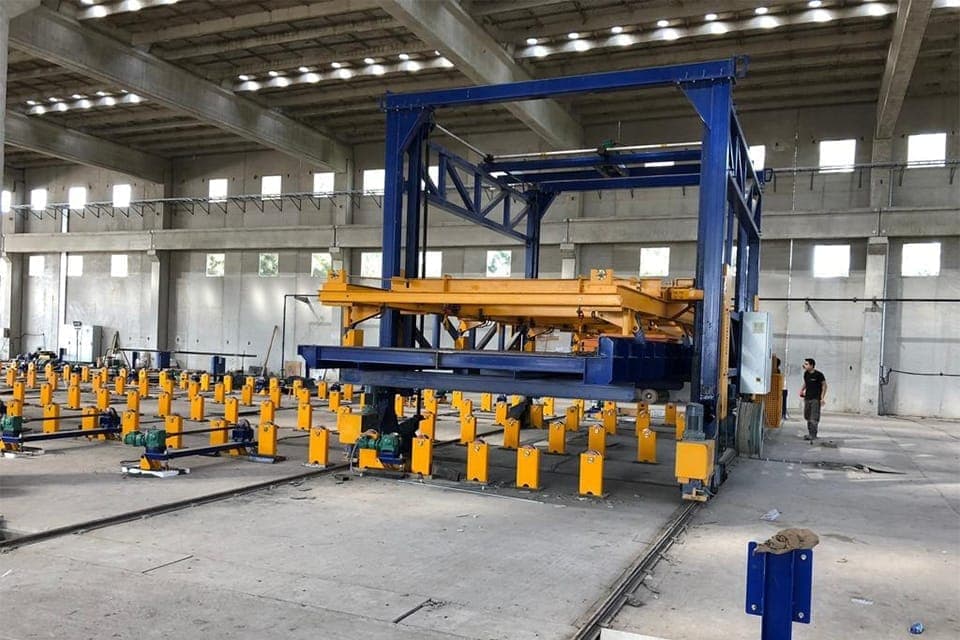
Primary product view
A controlled pallet-line system that moves casting pallets through shuttering, reinforcement, concrete placement, curing, demolding and cleaning stations.
Overall product view showing the form and principal interfaces.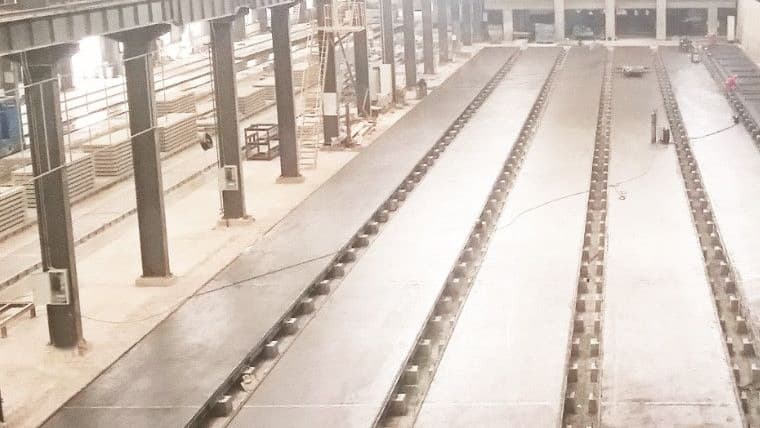
Wall panel casting station
Casting, reinforcement and shuttering stations must be balanced before automation produces reliable output.
The same pallet line can fail if product variation is too high.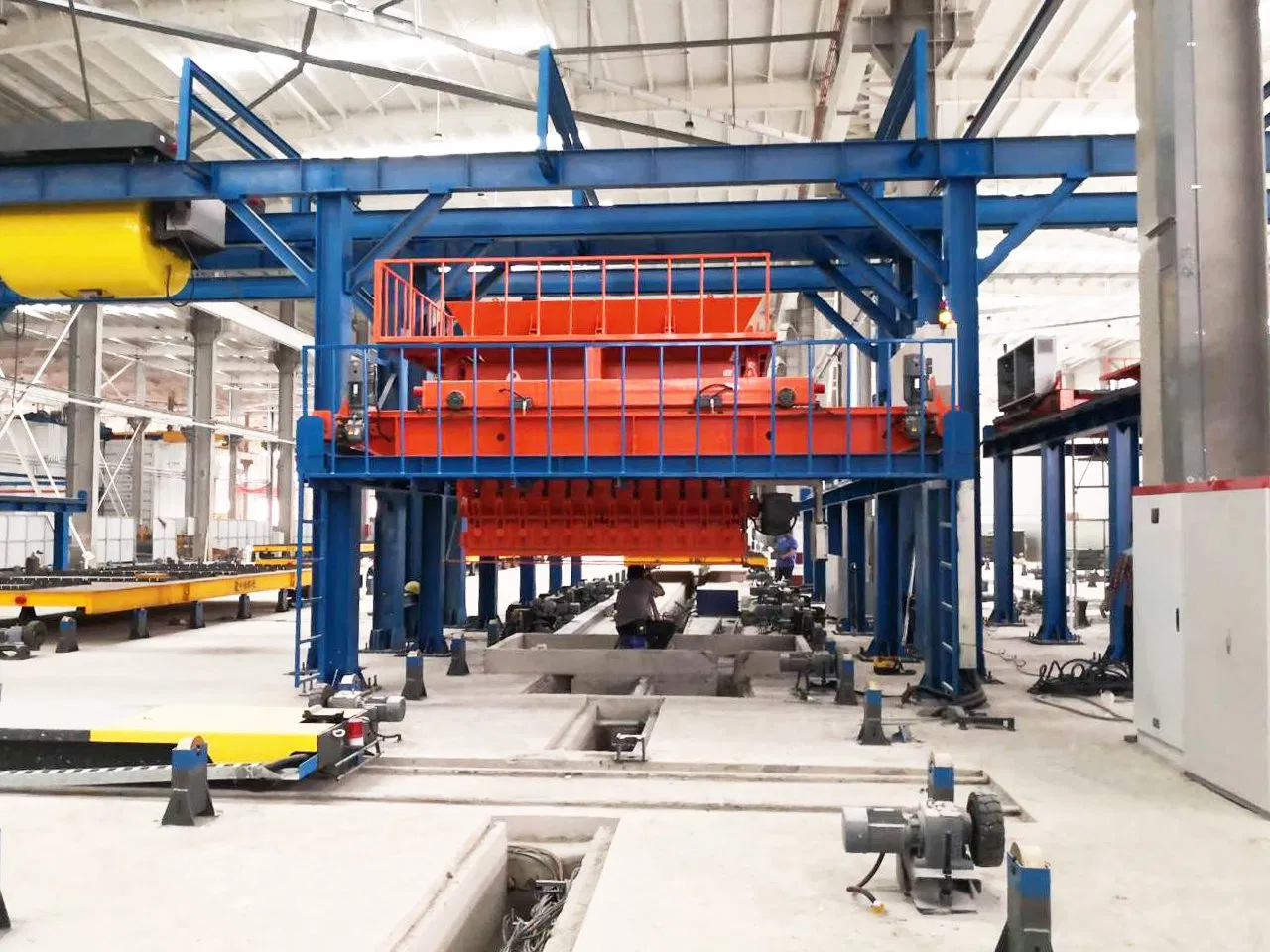
Concrete distribution station
Concrete delivery must match pallet travel, station cycle and cleaning workflow.
Use this as a production-flow reference. For pallet circulation system, check this interface with adjacent equipment, handling sequence and inspection records.Process references
Manufacturer process note for wall-line scope, product repetition, station sequence and production constraints.
Open process referenceElematicWall production line familiesSpecific manufacturer overview of circulation lines, battery molds, tilting tables, staircase molds and beam/column mold interfaces.
Open process referenceTechnical references
Standards context for Pallet Circulation System
These references identify where a technical review often starts. They are not a declaration of compliance, product approval or a replacement for the adopted project code.
Common rules for precast concrete products
Common requirements for precast concrete product standards, including basic performance and conformity-assessment context.
Use it as a common precast reference only. A product-specific standard and the project's adopted national rules take precedence.View standard recordBuilding Code Requirements for Structural Concrete
Structural concrete requirements for design and detailing in jurisdictions that adopt ACI 318.
A design-code reference, not a product approval or a substitute for the governing project code and engineer's drawings.View standard recordField notes
Pallet Circulation System operating variables
Pallet Circulation System should be selected around pallet size, cycle time, station count. Confirm use conditions, records and supplier data before comparing options.
Parameters to verify
- Pallet size
- Cycle time
- Station count
- Curing rack capacity
Records and inputs
- Product repetition
- Factory hall layout
- Daily output
- Operator staffing
Failure modes to watch
- Automating a variable product mix too early.
- Underestimating curing rack capacity.
- Treating software integration as optional.
Main types
- Semi-automatic circulation
- Fully automatic circulation
- Central shuttle systems
- Curing chamber circulation
Key specifications
- Pallet size
- Cycle time
- Station count
- Curing rack capacity
- MES or ERP connection
- Changeover method
Technical interface matrix
Read the product through application, geometry, production interface and acceptance evidence before comparing catalog data, drawings or technical offers.
| Area | Variables to check | Evidence normally needed | Interface risk |
|---|---|---|---|
| Application fit | High-volume wall panels; Facade elements; Sandwich panels | Product repetition; Factory hall layout | Automating a variable product mix too early. |
| Type and geometry | Semi-automatic circulation; Fully automatic circulation; Central shuttle systems; Curing chamber circulation | Product repetition; Factory hall layout; Daily output | Underestimating curing rack capacity. |
| Production interface | Calculate station balance before comparing speed.; Match pallet size to the common product, not the rare maximum.; Review maintenance capability for shuttles, rollers and controls. | Daily output; Operator staffing; Automation target | Treating software integration as optional. |
| Inspection and acceptance | Station count; Curing rack capacity; MES or ERP connection; Changeover method | Operator staffing; Automation target; IT integration needs; Automating a variable product mix too early. | Automating a variable product mix too early. |
Technical selection variables
- Calculate station balance before comparing speed.
- Match pallet size to the common product, not the rare maximum.
- Review maintenance capability for shuttles, rollers and controls.
- Ask for a realistic ramp-up plan.
Compare automation depth
Circulation systems should be specified around station balance and product repetition, not the visual impression of a modern factory.
| Decision factor | Semi-automatic circulation | Full automatic circulation | Evidence to inspect |
|---|---|---|---|
| Investment logic | Lower automation cost, more operator decisions | Higher fixed cost, stronger process discipline | Payback model at realistic utilization, not peak capacity. |
| Changeover | More flexible for variable inserts and openings | Faster for repeated panels with standardized details | Typical product changeover time with inserts, openings and labels included. |
| Data flow | Can work with paper or simple production plans | Needs reliable design data, labels and production tracking | BIM, ERP or MES data readiness for production tracking. |
Project interfaces and failure modes
- Automating a variable product mix too early.
- Underestimating curing rack capacity.
- Treating software integration as optional.
Drawings and field data normally required
- Product repetition
- Factory hall layout
- Daily output
- Operator staffing
- Automation target
- IT integration needs
Inspection and interface points
- Automating a variable product mix too early.
- Underestimating curing rack capacity.
- Treating software integration as optional.
Requirement checklists and evidence
Use these scope-control briefs when preparing technical assumptions, commissioning scope and acceptance evidence.
FAQ
What should be checked before comparing pallet circulation system?
Confirm the element type, production capacity, local standard, installation condition and maintenance capability first. Price comparison is weak when these basics are unclear.
Can PRECAST.WORLD organize technical evidence for this topic?
Yes. The goal is to organize production variables, drawings, photos, records and interface questions so the next technical discussion starts from evidence instead of assumptions.
Ask the technical desk about pallet circulation system
Send product type, capacity target, standards, drawings, photos or quality issues. PRECAST.WORLD will turn them into clearer technical notes for the next discussion.