Troubleshooting
PHC and PC Pile Installation: Site Sequence and Inspection Evidence
A field-focused technical reference for pile delivery, pitching, alignment, installation records, welded splices, testing and pile-cap interfaces.
Technical summary
PHC and PC pile installation quality is demonstrated by continuity of evidence: approved product identity, undamaged delivery, controlled pitching and alignment, pile-by-pile installation records, qualified splices, project-defined testing and a documented pile-head connection. No single photograph, pressure value or test result proves the whole installation.
Field notes
PHC and PC Pile Installation: Site Sequence and Inspection Evidence operating variables
PHC and PC pile installation quality is demonstrated by continuity of evidence: approved product identity, undamaged delivery, controlled pitching and alignment, pile-by-pile installation records, qualified splices, project-defined testing and a documented pile-head connection. No single photograph, pressure value or test result proves the whole installation.
Parameters to verify
- Match every delivered segment to the approved pile schedule and product certificate.
- Treat set-out, pitching and first-stage verticality as recorded installation controls.
- Link penetration, blow count or installation pressure to depth and pile identity.
- Inspect splice fit-up, welding sequence and cooling before installation resumes.
Records and inputs
- Approved pile schedule and drawings
- Product certificates and delivery markings
- Installation method and equipment data
- Pile-by-pile installation records
Failure modes to watch
- Product identity is not traceable.
- Installation records cannot be matched to pile numbers.
- Splice acceptance evidence is incomplete.
Visual workflow
From delivered segment to accepted foundation pile
The site workflow is a connected evidence sequence. Product identity, alignment, installation response, joints, testing and pile-head work must remain traceable to one pile number.
Verify markings, certificates, condition and segment identity.
Confirm coordinates, pitching method and initial alignment.
Record depth against blows, pressure or other approved process data.
Control fit-up, welding, inspection and cooling before restart.
Apply the design and geotechnical termination criteria.
Reconcile tests, survey, pile-head work and the final pile file.
Production context
Factory quality, transport, site handling, installation equipment, splice workmanship, records and foundation acceptance form one continuous evidence chain for precast spun piles.
Field sequence
Technical method and evidence chain
Read each stage with the product definition, adopted standard, approved procedure and item-specific records.
1. Delivery establishes product identity
The site record begins before the pile enters the leaders. Markings, product certificates and the delivery schedule should identify the manufacturer, product designation, strength or performance class, length, production batch and inspection status required by the project.
Receiving inspection should also record end-plate condition, cracks, damaged edges, exposed reinforcement, lifting damage and storage support. A segment that cannot be linked to the approved schedule creates a traceability gap even when its dimensions look correct.
- Photograph the marking and both pile ends before installation.
- Record pile number, segment length and delivery batch in a form that will follow the installed pile.
- Quarantine damaged or unidentified segments until the project acceptance basis is resolved.
2. Installation equipment is part of the foundation system
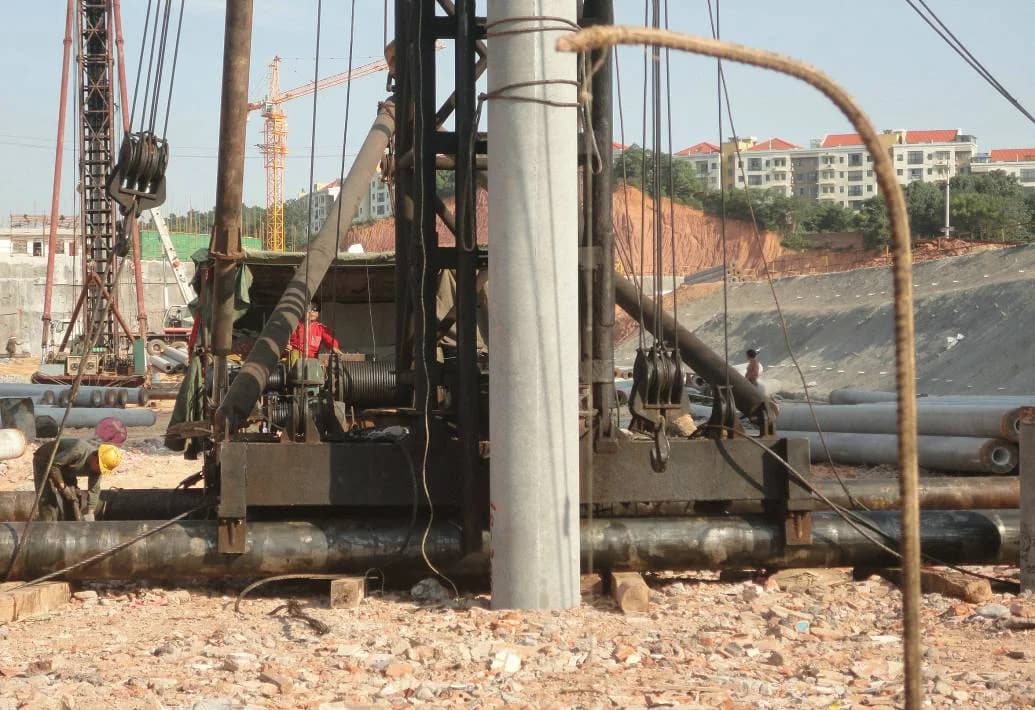
Rig capacity, leader geometry, hammer or jacking system, pile helmet, cushions, lifting points and ground bearing condition all affect how load reaches the pile. Equipment data should be reviewed against the pile section, segment mass, predicted resistance, access and working platform.
For hydraulic jacking, pressure records require a verified relationship between gauge pressure and delivered force. For impact driving, hammer energy, cushion condition, set measurement and blow records must be read together. These are different installation processes and should not be reduced to one generic capacity number.
3. Set-out, pitching and initial alignment
Survey control fixes the pile position; the lifting and pitching method controls whether the segment enters the leaders without impact damage. Alignment should be checked in two perpendicular directions before significant penetration, then rechecked as installation begins.
In the Chinese construction context, JGJ/T 406-2017 states that after the first pile section is inserted about 0.5-1.0 m, verticality should be checked and the initial deviation should not exceed 0.5 percent. This is a China-specific reference point, not a universal tolerance; the adopted project standard governs elsewhere.
4. Installation records must remain pile-specific
The useful record is a time- and depth-based history linked to one pile. It should identify each segment, installation equipment, interruptions, obstructions, penetration or set behavior, pressure or blow data, splice times, final termination and any deviation from the approved method.
Termination is an engineering acceptance point. Design depth, final set, jacking force, soil response and geotechnical criteria may all matter, but their priority depends on the approved design and method statement. The record should preserve the evidence rather than replace it with a later summary.
5. The splice is a structural and installation interface
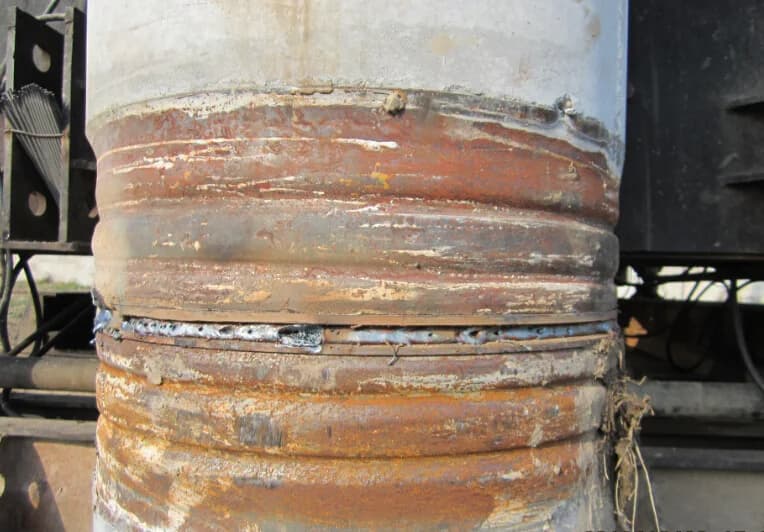
Before welding, mating end plates should be clean, aligned and brought into uniform contact. Fit-up affects force transfer and weld access. Welding consumables, sequence, layer control, inspection and the welder qualification required by the project should be documented.
Chinese pile construction guidance includes a maximum 2 mm mismatch between connected pile sections and at least 8 minutes of natural cooling after welding before installation resumes. Apply those values only where the governing Chinese requirement is adopted; other jurisdictions and proprietary joint systems may specify different acceptance criteria.
- Record joint location and the identity of the two connected segments.
- Photograph fit-up before welding and the completed joint after cleaning.
- Record inspection and cooling time before restarting driving or jacking.
6. Testing must reconcile with installation history
Static load testing, integrity testing and other project tests answer different questions. The approved plan should define method, timing, quantity, pile selection, acceptance criteria and reporting. Sampling ratios vary by jurisdiction and project risk; they should never be presented as a universal percentage.
A test report becomes more useful when it identifies the tested pile and includes its product certificates, installation trace, splice records and anomalies. JGJ 106 and GB 50202 are relevant Chinese references, while the project specification and local authority control the actual acceptance route.
7. Pile-head preparation closes the load path
Cut-off level, pile-head integrity, core cleaning, reinforcement anchorage and infill concrete connect the installed pile to the pile cap. The detail should come from the structural drawings and approved construction method, not from a generic site habit.
Before pile-cap concrete, record the final cut-off level, condition of the pile wall and end plate, reinforcement position, anchorage length, cleanliness and concrete placement. This final interface is part of foundation acceptance, not a separate finishing activity.
8. Build one evidence chain
A defensible pile file links design identity, factory evidence, delivery, installation, splices, testing, survey and pile-head work. The sequence matters because a later result cannot explain an earlier unrecorded event.
Digital records should preserve pile number, location, timestamps, responsible personnel, source documents and photographs. Exceptions should remain visible with their disposition and approval instead of being overwritten by the final completion schedule.
Field photographs
What the record should show
Each image is tied to a specific production, test or acceptance interface; none is a generic placeholder.
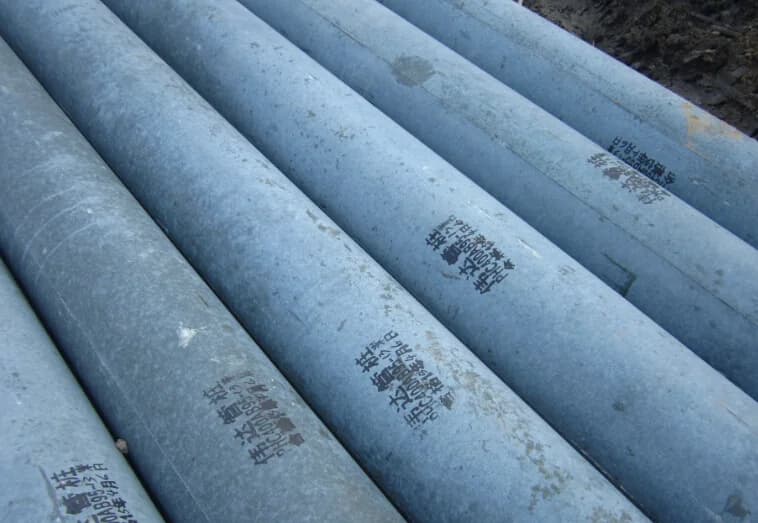
Product markings connect each delivered segment to its certificate, schedule and later installation record.
Inspect identity, end plates, cracks, lifting damage and storage support before pitching.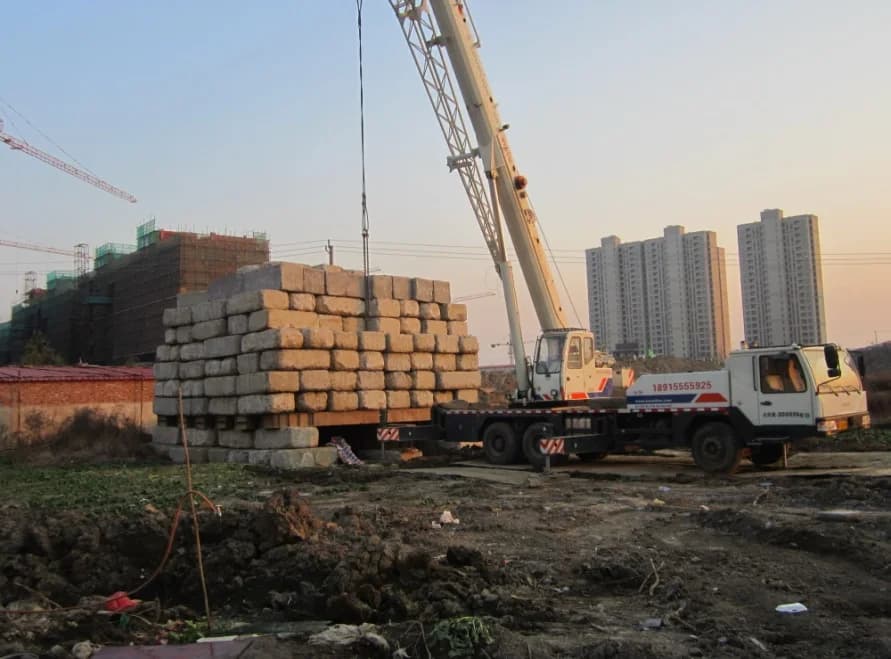
The test setup, instrumentation, loading procedure and pile identity must match the approved test plan.
Static loading and integrity testing provide different evidence and should not be treated as interchangeable.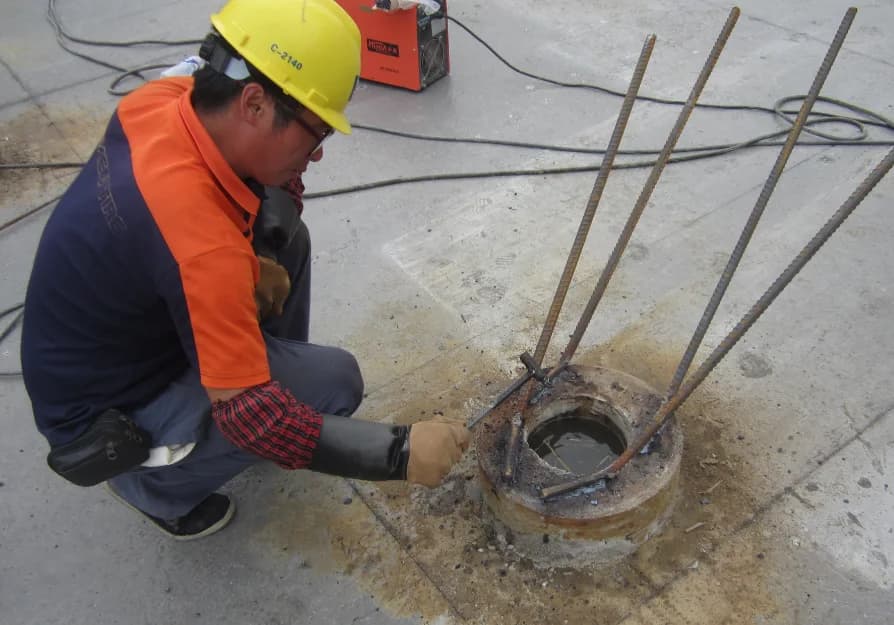
The pile-head detail transfers forces from the installed pile into the pile cap.
Check cut-off level, pile-wall condition, reinforcement position and anchorage against structural drawings.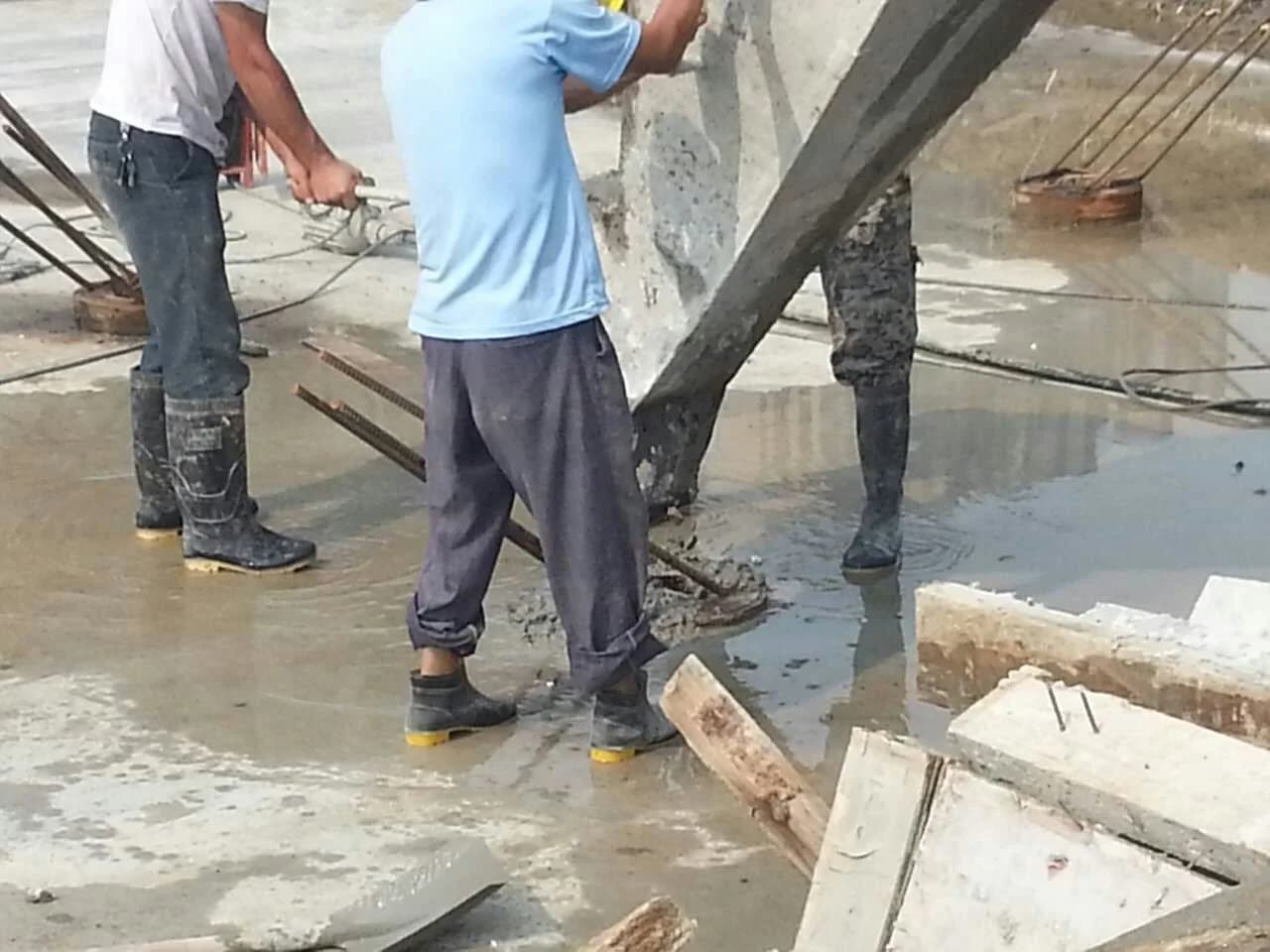
Core cleaning, reinforcement and concrete placement complete the pile-to-cap interface where the design uses an infilled core.
The structural detail and concrete requirements are project-specific.Where this applies
- PHC and PC spun piles installed by impact driving, hydraulic jacking or project-approved equivalent methods
- Building, industrial and infrastructure foundations using factory-produced prestressed concrete pile segments
- Projects where several pile segments are connected on site before reaching the required termination condition
- Foundation acceptance reviews that must reconcile product, installation, testing and pile-cap records
Engineering variables
- Match every delivered segment to the approved pile schedule and product certificate.
- Treat set-out, pitching and first-stage verticality as recorded installation controls.
- Link penetration, blow count or installation pressure to depth and pile identity.
- Inspect splice fit-up, welding sequence and cooling before installation resumes.
- Connect testing and pile-head preparation to the governing foundation acceptance plan.
System interfaces
- Read the pile schedule, installation method statement and test plan as one controlled package.
- Compare actual site records by pile number, segment, depth and time rather than relying on a final completion list.
- Trace anomalies back through delivery, handling, alignment, splice and installation records before interpreting test results.
Production evidence checklist
| Production variable | Why it matters in production | Records or evidence to inspect | Interface risk |
|---|---|---|---|
| Pile identity | Links design location to factory product, delivered segment and installed record. | Pile schedule, product certificate, visible markings, delivery note and receiving photographs. | Unidentified segments break traceability even if diameter and length appear correct. |
| Equipment and working platform | Controls lifting, alignment and installation energy or force without damaging the pile. | Rig data, hammer or jacking calibration, helmet and cushion details, ground-bearing review and pre-start inspection. | A correct pile can be damaged or misinstalled by unsuitable equipment or an unstable platform. |
| Set-out and alignment | Establishes pile position and axis before soil resistance makes correction difficult. | Survey coordinates, two-direction alignment readings, pitching photographs and deviation records. | Late correction can induce cracking, eccentric contact or an out-of-position foundation. |
| Installation trace | Preserves penetration response, interruptions and termination evidence for each pile. | Depth-time log, blow count or pressure-force data, segment and splice times, obstructions and final termination record. | A final depth list cannot reconstruct abnormal installation behavior. |
| Splice control | Transfers axial, bending and installation forces between pile segments. | End-plate fit-up, consumables, welder qualification, weld inspection, photographs and cooling time. | Poor fit-up or premature restart can damage the joint while remaining hidden below ground. |
| Testing | Verifies the aspects of capacity or integrity defined by the approved foundation plan. | Test method, pile selection, installation history, calibration, raw readings, interpretation and acceptance record. | A result is weak evidence when the tested pile cannot be reconciled with its installation history. |
| Pile-head interface | Connects the installed pile to the pile cap and closes the structural load path. | Cut-off survey, pile-head condition, reinforcement and anchorage inspection, core cleaning and concrete placement record. | Correct installation below ground does not compensate for an undocumented or defective pile-head connection. |
Technical references
Standards context for PHC and PC Pile Installation: Site Sequence and Inspection Evidence
These references identify where a technical review often starts. They are not a declaration of compliance, product approval or a replacement for the adopted project code.
Pretensioned spun high-strength concrete piles
Current Chinese national product standard for pretensioned spun high-strength concrete piles, effective 1 March 2024 and replacing the 2009 edition.
Product-standard context for China. Project drawings, foundation design and construction acceptance requirements remain separate controls.View standard recordTechnical standard for prestressed concrete pipe pile foundations
Chinese technical context for design, construction and inspection of prestressed concrete pipe-pile foundations.
Use only where adopted by the project or authority. The article identifies China-specific alignment and splice references rather than treating them as global rules.View standard recordStandard for acceptance of construction quality of building foundation
Chinese construction quality acceptance context for building foundations, including pile-foundation work.
Acceptance scope must be read with the project documents, adopted test plan and applicable local requirements.View standard recordTechnical code for testing of building foundation piles
Chinese technical context for foundation-pile testing methods and reporting.
Testing method, quantity and acceptance criteria remain project- and jurisdiction-specific; no universal sampling ratio is stated here.View standard recordTechnical references
Original sources and related manuals
Open the governing standard record, original process source or related product manual for the underlying scope and terminology.
Verify the current Chinese PHC pile product standard and its implementation date.
Open process referenceJinan Municipal Construction authorityGB 50202-2018 official publicationOfficial government-hosted publication of the Chinese foundation construction quality acceptance standard.
Open process referenceFujian Provincial Department of Housing and Urban-Rural DevelopmentCurrent pile-testing supervision using JGJ 106-2014Confirms current government use of JGJ 106-2014 for pile-test selection and supervision while leaving the project test plan in control.
Open process referencePRECAST.WORLDSpun pile mold product manualConnect site traceability back to pile dimensions, end plates, mold condition and factory production evidence.
Open process referenceWeiler GmbHPoles, piles and columns equipmentOfficial manufacturer reference for spun pole and pile molds, concrete delivery, cage welding, centrifugal spinning, curing and handling scope.
Open process referenceWeak assumptions seen in projects
- Accepting untraceable pile segments because diameter and length appear correct.
- Correcting alignment only after the pile has developed significant penetration.
- Treating welded joints as visual details without fit-up, welding and cooling records.
- Using a single test result without checking pile identity, installation history and the approved sampling plan.
Inspection and acceptance points
- Product identity is not traceable.
- Installation records cannot be matched to pile numbers.
- Splice acceptance evidence is incomplete.
- Testing scope differs from the approved project plan.
FAQ
What is the first decision to make for phc and pc pile installation: site sequence and inspection evidence?
Start with product type, target capacity and local requirements. These inputs shape equipment, mold, material and quality-control choices.
What information should be prepared before speaking with suppliers?
Prepare drawings, target output, local standards, installation limits, available utilities, budget range and the questions you need answered.
Need to frame the technical context?
Send product type, capacity target, standards, drawings, photos or quality issues. PRECAST.WORLD will turn them into clearer technical notes for the next discussion.