Technical Articles
Precast Square Pile Installation: Handling, Pitching, Pressing and Splicing
A field-sequence reference for solid and hollow precast square piles, covering product identity, storage, lifting, alignment, installation records, splices and acceptance interfaces.
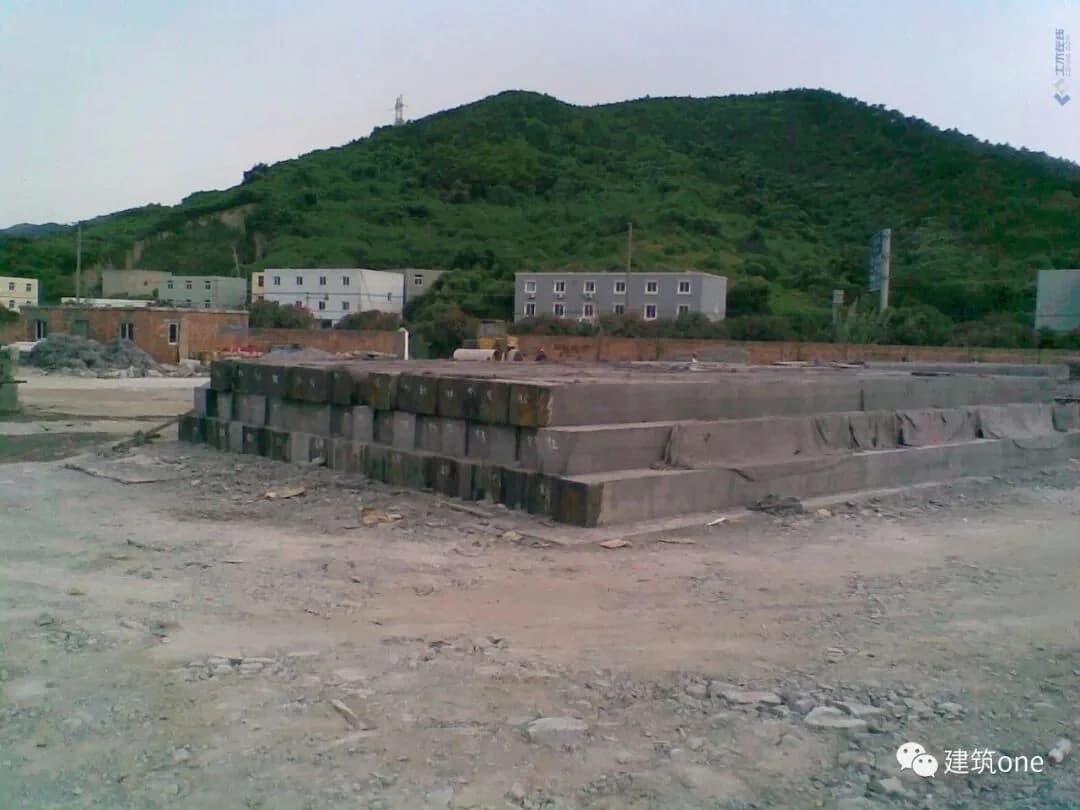
Technical summary
A square-pile installation record should connect the declared pile type and approved drawings to delivery identity, storage support, lifting, two-direction alignment, pile-specific pressing or driving data, every splice, the project termination criterion and final survey. Product and foundation standards vary by pile type and jurisdiction; project method values should not be treated as universal limits.
Field notes
Precast Square Pile Installation: Handling, Pitching, Pressing and Splicing operating variables
A square-pile installation record should connect the declared pile type and approved drawings to delivery identity, storage support, lifting, two-direction alignment, pile-specific pressing or driving data, every splice, the project termination criterion and final survey. Product and foundation standards vary by pile type and jurisdiction; project method values should not be treated as universal limits.
Parameters to verify
- Identify whether the product is reinforced, prestressed, solid or hollow before applying a product standard.
- Reconcile pile marks, segment lengths, end details and certificates with the approved pile schedule.
- Check lifting points, storage supports and rig capacity against the actual segment geometry and mass.
- Record initial and continuing alignment in two perpendicular directions before correction becomes impractical.
Records and inputs
- Pile schedule and structural drawings
- Product type, designation and adopted product standard
- Segment dimensions, mass, lifting points and end details
- Geotechnical profile and installation method
Failure modes to watch
- Delivered segments cannot be matched to certificates or pile locations.
- Storage, lifting or pitching damage is not recorded before installation.
- Alignment readings are absent or recorded only after deep penetration.
Visual workflow
Square pile installation as one evidence chain
Read the field sequence from product identity through final acceptance. Each photograph or measurement proves only its own stage unless it remains linked to the same pile number.
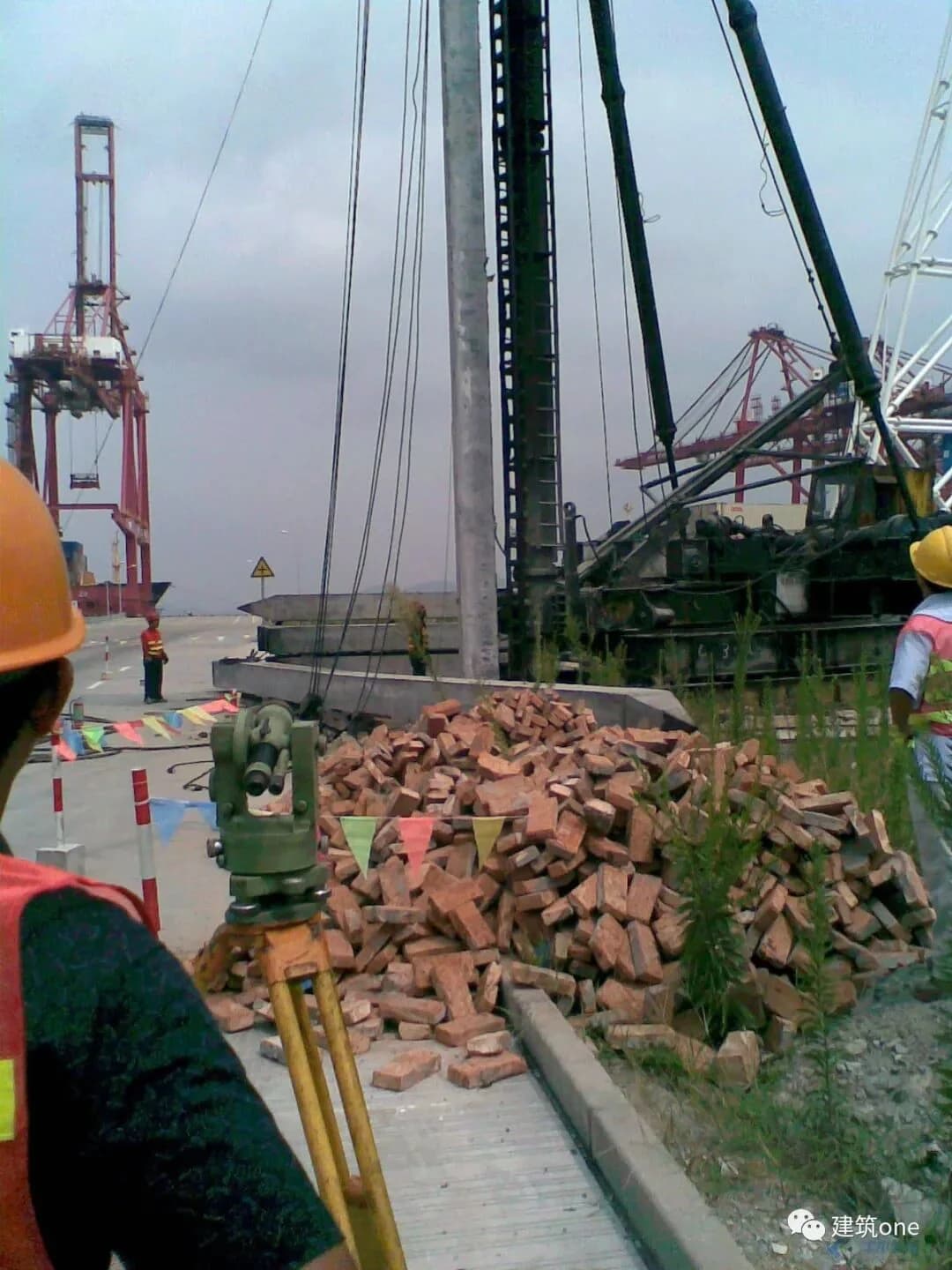
Match product, markings, certificates and condition to the pile schedule.
Support segments on stable ground without introducing bending or damage.
Use the approved lifting points, rig path and worker exclusion controls.
Confirm set-out and observe the initial axis in two directions.
Record depth, time and method-specific process data for each pile.
Reconcile splices, termination, survey, tests and the pile-head interface.
Production context
Precast square piles may be reinforced or prestressed, solid or hollow, and installed by impact driving, hydraulic pressing or another approved method. The visible site sequence is only useful when each stage remains traceable to one pile location and the standard adopted by the project.
Field sequence
Technical method and evidence chain
Read each stage with the product definition, adopted standard, approved procedure and item-specific records.
1. Fix the square-pile product identity
Square cross-section does not define one product. Reinforced concrete piles, prestressed solid square piles and prestressed hollow square piles have different product standards, reinforcement systems, end details and inspection records.
The receiving file should identify the declared product, manufacturer, batch, dimensions, segment length, end configuration and acceptance status. The field team should not infer product class from appearance alone.
- Use JG/T 197-2018 as Chinese product context for prestressed hollow square piles.
- Use JC/T 2723-2022 as Chinese product context for prestressed solid square piles.
- Confirm the project edition, local foundation rules and structural drawings before applying either reference.
2. Receiving and storage preserve installable condition
Receiving inspection should connect visible markings and certificates to the pile schedule, then record cracks, spalls, damaged corners, exposed reinforcement, end condition and transport damage.
Storage supports should be level, stable and positioned for the product and segment length. Support misalignment and uneven ground can introduce bending before the pile reaches the rig.
3. Lifting is a structural handling stage
The lifting arrangement should follow the approved lifting points and segment mass. Sling geometry, crane capacity, tag-line control, worker exclusion and the path from stack to leaders belong to the method statement.
A pile that rotates, impacts another segment or bears on an unplanned point during lifting requires condition review before installation continues.
4. Set-out, pitching and initial alignment
Survey control establishes the pile location; pitching establishes the initial axis. Alignment should be observed in two perpendicular directions while the pile is still at a stage where correction does not impose damaging curvature.
The record should preserve survey reference, pile number, time, initial readings and any correction. Numeric tolerances remain those of the adopted standard and project procedure.
5. Installation data must remain pile-specific
Hydraulic pressing, impact driving and other methods generate different evidence. For pressing, the relationship between gauge pressure and delivered force must be understood. For driving, hammer, cushion, energy, penetration and set records must be read together.
A useful log follows depth against time and process data, including interruptions, obstructions, changes in response, segment additions and deviations from the approved sequence. A final number alone cannot reconstruct the installation.
6. Splices connect product segments into one pile
Before joining, the mating ends should be clean, aligned and checked for uniform contact and joint access. The adopted joint detail controls fit-up, consumables, sequence, inspection and the point at which installation may resume.
The splice record should identify both segments and pile location, then preserve fit-up, completed-joint and inspection evidence. Values copied from a historical site article are not acceptance criteria.
7. Termination, survey and foundation acceptance
Termination may involve design elevation, installation response, geotechnical criteria or a combination defined by the approved documents. The site team records evidence; it does not replace the foundation engineer's acceptance basis.
Final pile position, cut-off level, test records, pile-head preparation and pile-cap connection should reconcile with the same pile identity used during delivery and installation.
Field photographs
What the record should show
Each image is tied to a specific production, test or acceptance interface; none is a generic placeholder.
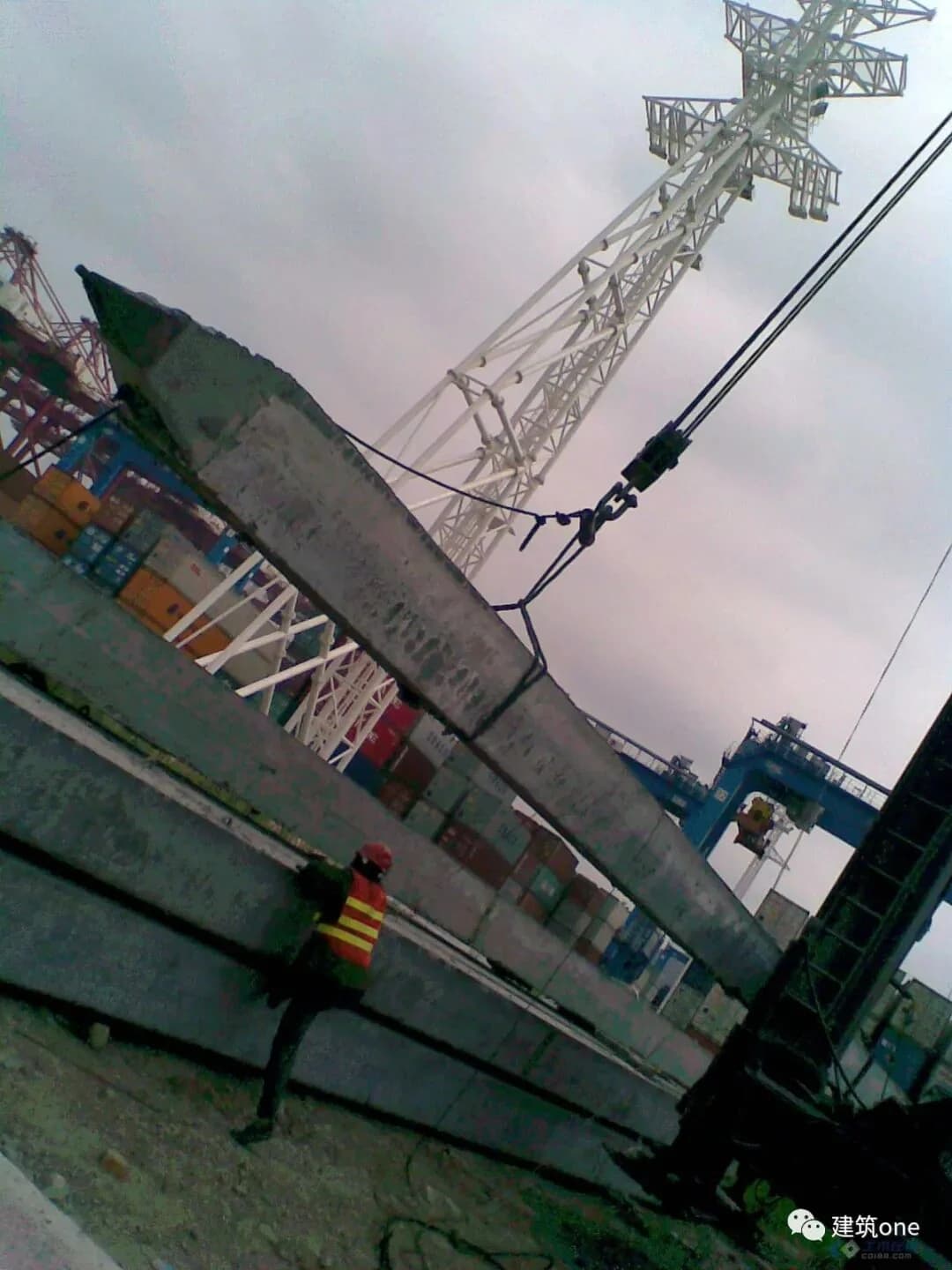
The lifting arrangement transfers a long segment from storage toward the installation equipment.
The photograph demonstrates handling sequence, not an approved universal sling layout.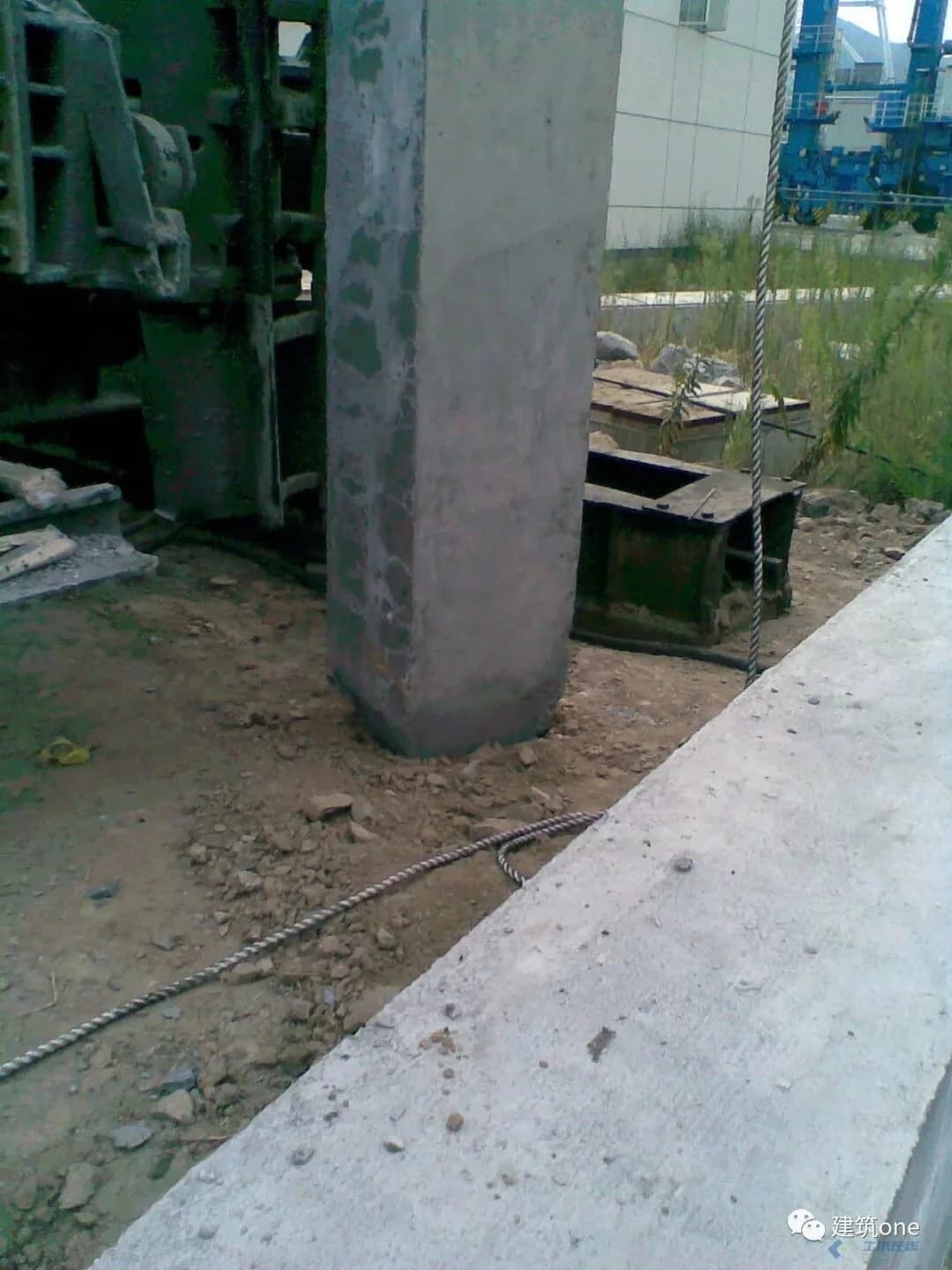
Initial positioning controls the pile axis before significant penetration begins.
Alignment acceptance depends on the adopted project standard and recorded survey method.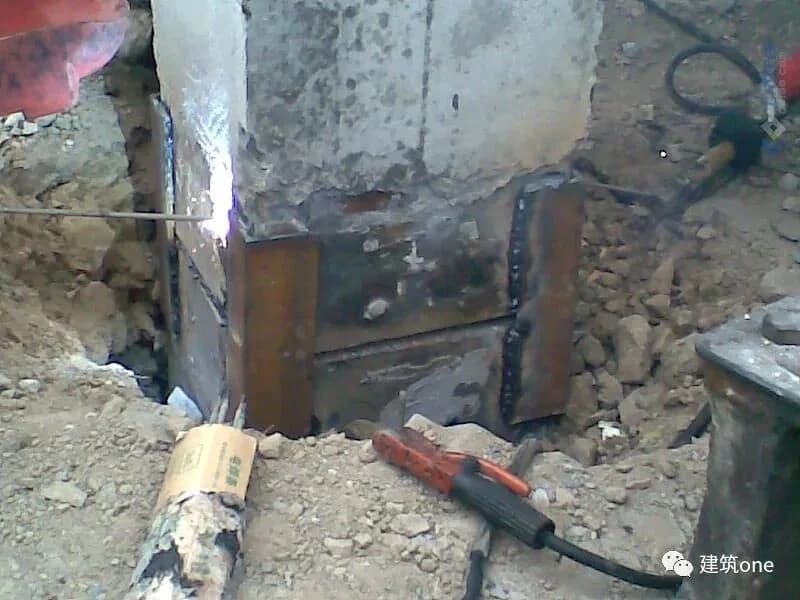
The splice connects adjacent segments before installation continues below ground.
Joint design, fit-up, welding and inspection must follow the approved project procedure.Where this applies
- Industrial and building foundations using factory-produced solid or hollow square pile segments
- Transmission, utility, port and infrastructure foundations where square piles are adopted by the design
- Hydraulic static pressing and impact-driving operations with project-approved equipment and termination criteria
- Site quality reviews that reconcile delivery, installation, splice and final survey records
Engineering variables
- Identify whether the product is reinforced, prestressed, solid or hollow before applying a product standard.
- Reconcile pile marks, segment lengths, end details and certificates with the approved pile schedule.
- Check lifting points, storage supports and rig capacity against the actual segment geometry and mass.
- Record initial and continuing alignment in two perpendicular directions before correction becomes impractical.
- Link force, pressure, blow or penetration data to depth, time, segment and pile position.
- Inspect each splice as a structural interface and apply only the joint procedure adopted by the project.
- Use the approved design and geotechnical termination criteria rather than a copied pressure or depth value.
System interfaces
- Read the product standard, foundation design, geotechnical report and installation method statement as one controlled package.
- Compare equipment by the actual installation process and working platform, not by nominal machine capacity alone.
- Trace anomalies through delivery condition, lifting, set-out, alignment, installation response and splice history.
- Separate a visual site example from the governing acceptance rule; photographs show workflow, not universal tolerances.
Production evidence checklist
| Production variable | Why it matters in production | Records or evidence to inspect | Interface risk |
|---|---|---|---|
| Product identity | Separates reinforced, prestressed, solid and hollow square piles before standards or acceptance criteria are applied. | Pile schedule, drawings, product certificate, markings, batch and receiving record. | A visually similar pile can be checked against the wrong product or foundation requirement. |
| Storage and lifting | Keeps long segments supported and transfers them to the leaders without bending, impact or corner damage. | Support layout, lifting drawing, segment mass, crane plan, pre-lift condition and damage record. | Handling damage may be installed below ground before it is linked to the affected segment. |
| Set-out and alignment | Establishes pile location and axis while correction remains possible. | Survey control, pile coordinates, two-direction readings, photographs and correction record. | Late correction can introduce bending, eccentric contact or out-of-position pile heads. |
| Installation trace | Shows how one pile responded with depth, time and the adopted driving or pressing method. | Equipment identity, calibration basis, depth-time log, force or blow data, interruptions and anomalies. | A final depth or pressure value hides the sequence that produced it. |
| Splice control | Transfers installation and service actions between segments while preserving pile alignment. | Segment identity, fit-up, joint detail, consumables, qualification, inspection and restart record. | A weak or misaligned joint becomes inaccessible after installation resumes. |
| Termination and acceptance | Connects field response to the design, geotechnical criteria, final survey and pile-cap interface. | Approved criterion, final record, test plan, survey, cut-off and pile-head inspection. | A copied generic stopping rule can conflict with the actual soil profile and foundation design. |
Technical references
Standards context for Precast Square Pile Installation: Handling, Pitching, Pressing and Splicing
These references identify where a technical review often starts. They are not a declaration of compliance, product approval or a replacement for the adopted project code.
Prestressed concrete hollow square piles
Current Chinese industry product standard for prestressed concrete hollow square piles, effective 1 April 2019 and replacing the 2006 edition.
Product context only. Foundation design, installation, testing and acceptance also depend on the project and local rules.View standard recordPrestressed concrete solid square piles
Current Chinese industry product standard covering prestressed solid square pile classification, requirements, testing, inspection, marking, stacking, lifting and transport.
Use for a declared prestressed solid square pile where adopted; do not apply it automatically to hollow or non-prestressed products.View standard recordTechnical specification for prestressed concrete hollow square pile foundations
Current Jiangsu local foundation specification record, including the first amendment effective 24 August 2024.
Regional Chinese reference only. It demonstrates why local foundation rules and amendments must be checked before using project values.View standard recordTechnical specification for prestressed concrete pipe piles and hollow square piles
Hubei local technical specification effective 13 June 2026 for prestressed concrete pipe piles and hollow square piles.
Regional reference showing current local practice; it is not a global or nationwide replacement for the project's adopted rules.View standard recordTechnical references
Original sources and related manuals
Open the governing standard record, original process source or related product manual for the underlying scope and terminology.
Weak assumptions seen in projects
- Applying hollow-pile or pipe-pile requirements to a solid square pile without checking the product designation.
- Stacking long segments on uneven supports or lifting them from unverified points.
- Correcting a pile only after substantial penetration has introduced bending or eccentric contact.
- Recording a final pressure or depth without the preceding time- and depth-based installation trace.
- Restarting installation after a splice without the inspection and waiting period required by the approved procedure.
- Treating a project method statement copied from another soil profile as a current standard.
Inspection and acceptance points
- Delivered segments cannot be matched to certificates or pile locations.
- Storage, lifting or pitching damage is not recorded before installation.
- Alignment readings are absent or recorded only after deep penetration.
- Installation data cannot be reconciled with depth, time and pile identity.
- Splice fit-up, workmanship or inspection evidence is incomplete.
- Termination and acceptance rely on a generic value instead of the approved project basis.
FAQ
Are solid and hollow square piles covered by the same product standard?
Not automatically. In the current Chinese standard system, JG/T 197-2018 covers prestressed hollow square piles while JC/T 2723-2022 covers prestressed solid square piles. The declared product and project jurisdiction control the applicable documents.
Does one final pressing-force value prove pile acceptance?
No. It must be read with equipment calibration, depth-time history, soil profile, interruptions, splices and the termination criteria approved for that foundation.
Can the photographs define lifting points or alignment tolerance?
No. They show visible workflow only. Lifting points, sling arrangement, tolerances and correction limits come from the product, drawings and adopted method.
What should a splice record contain?
At minimum it should identify the pile and both segments, show fit-up and alignment, record the approved joint procedure, workmanship inspection and the point at which installation resumed.
Need to frame the technical context?
Send product type, capacity target, standards, drawings, photos or quality issues. PRECAST.WORLD will turn them into clearer technical notes for the next discussion.