Equipment
Hollow Core Slab Machine
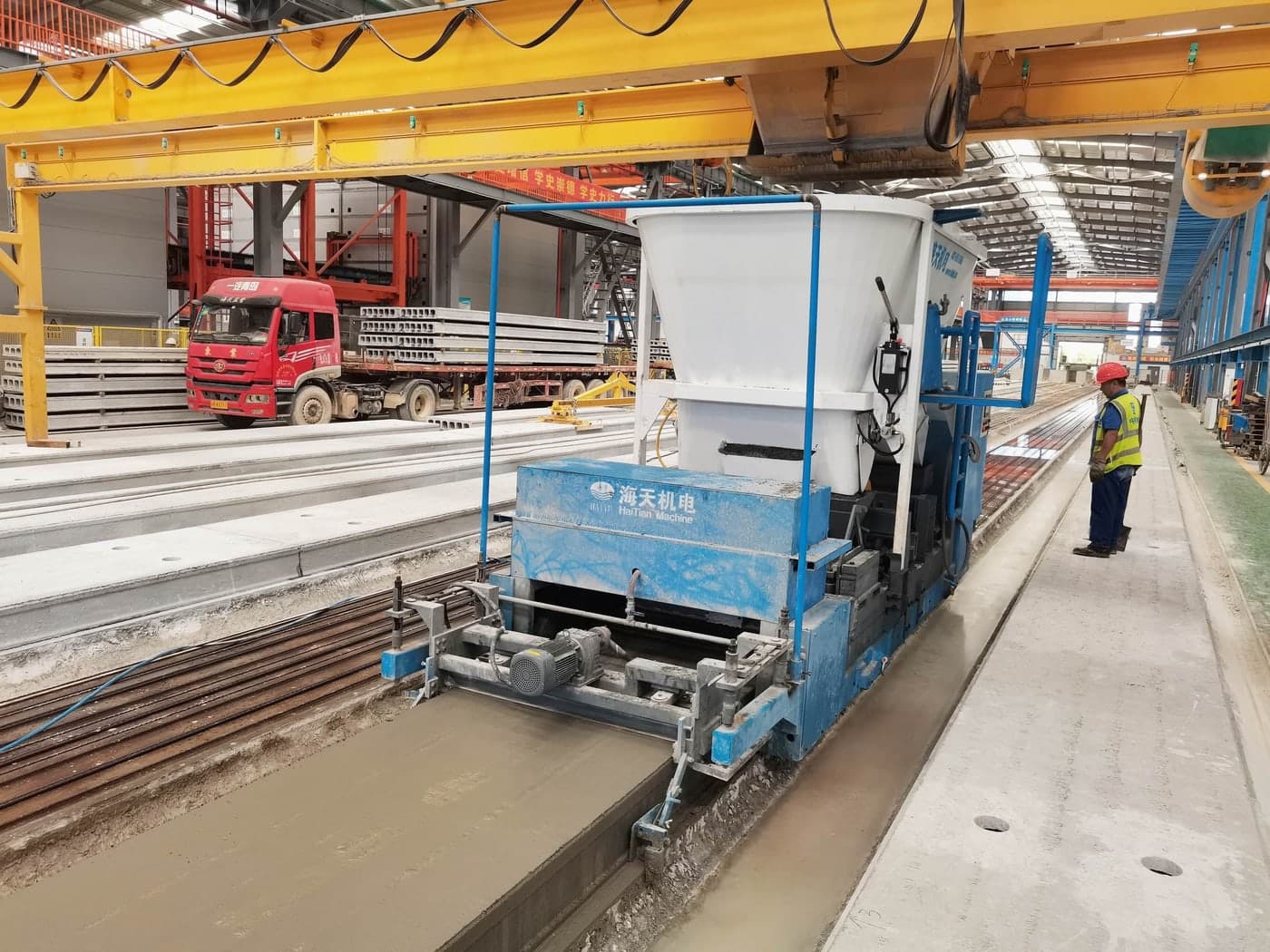
An extruder or slipformer that shapes continuous prestressed hollow-core slabs on long beds before curing, cutting, lifting and storage.
A hollow core slab machine is only one part of the line: casting beds, prestressing, zero-slump concrete control, curing, cutting and lifting must be designed together.
A hollow core slab machine forms continuous prestressed slabs with longitudinal voids, usually on a long bed with cutting after curing.
- Floor slabs
- Roof slabs
- Parking structures
- Industrial buildings
- Slab profile and height
- Bed length
- Prestressing force
- Concrete workability window
Product photographs
Product form, interfaces and production context
The views below show the product itself together with relevant handling, installation or production interfaces.
Primary product view
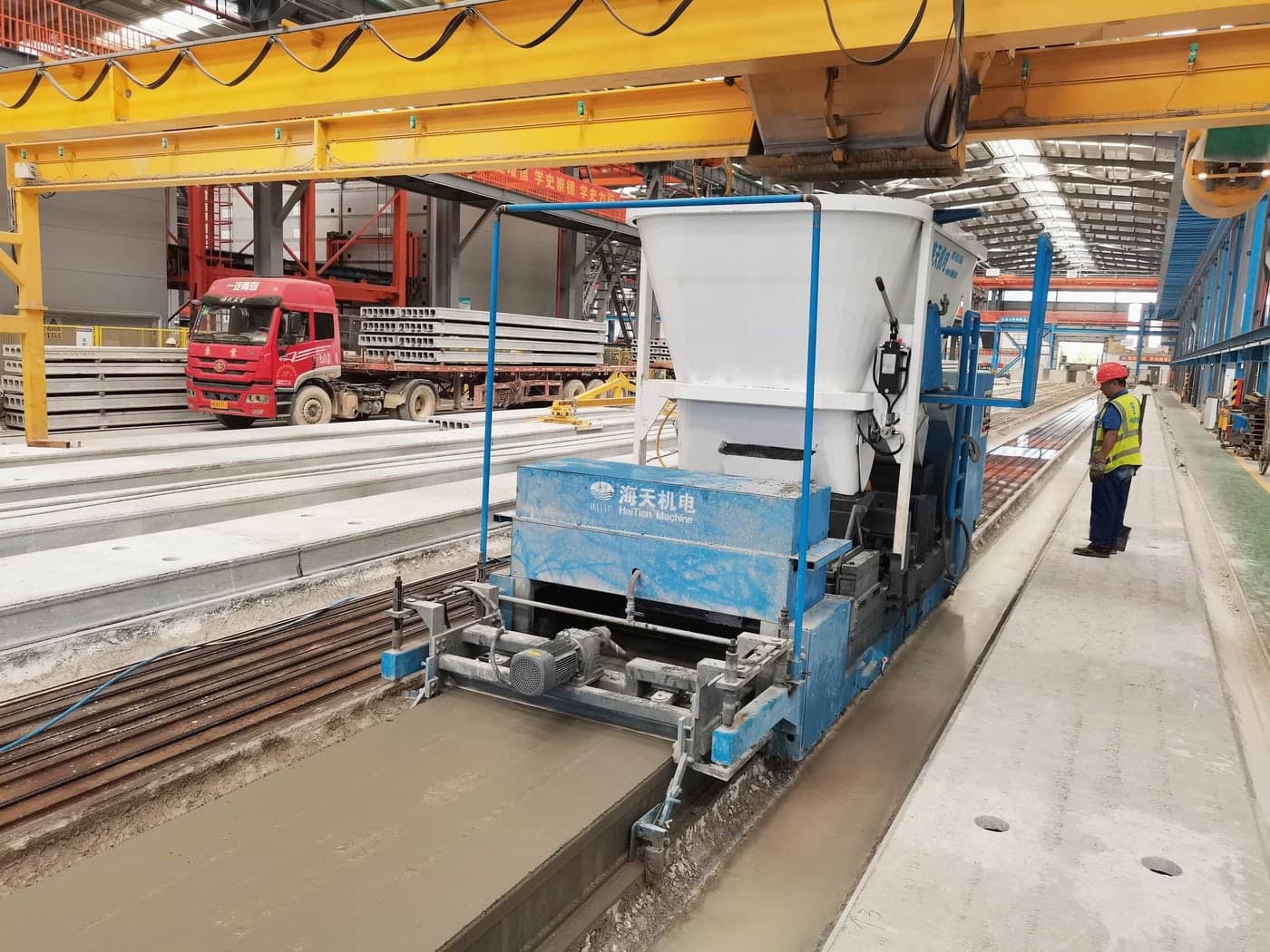
An extruder or slipformer that shapes continuous prestressed hollow-core slabs on long beds before curing, cutting, lifting and storage.
Overall product view showing the form and principal interfaces.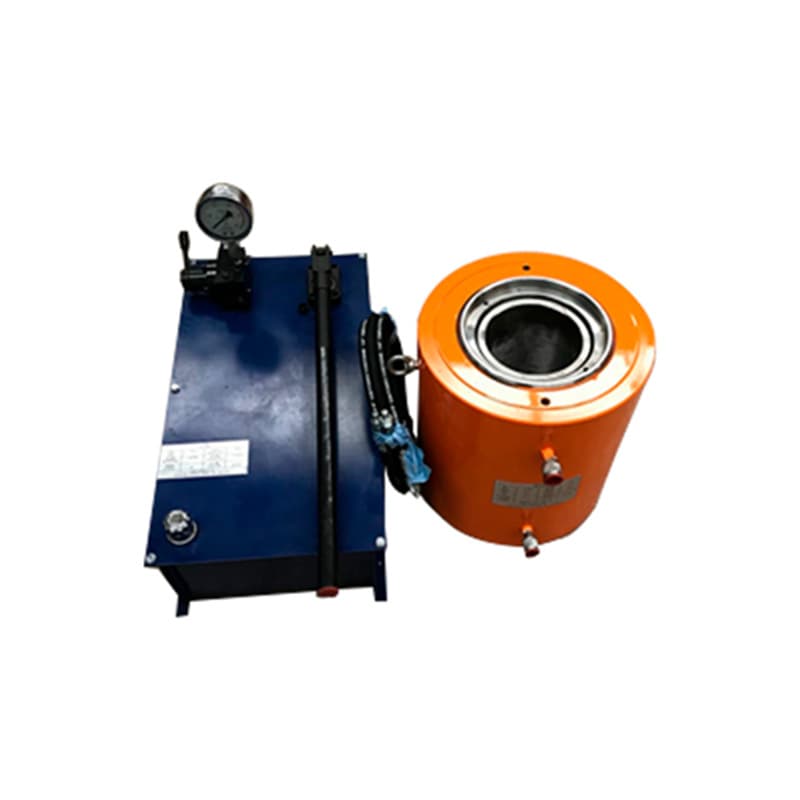
Prestressing jack and pump
Prestressing force, calibration and elongation records are part of slab production quality.
Use this to connect the casting machine with prestressing procedure.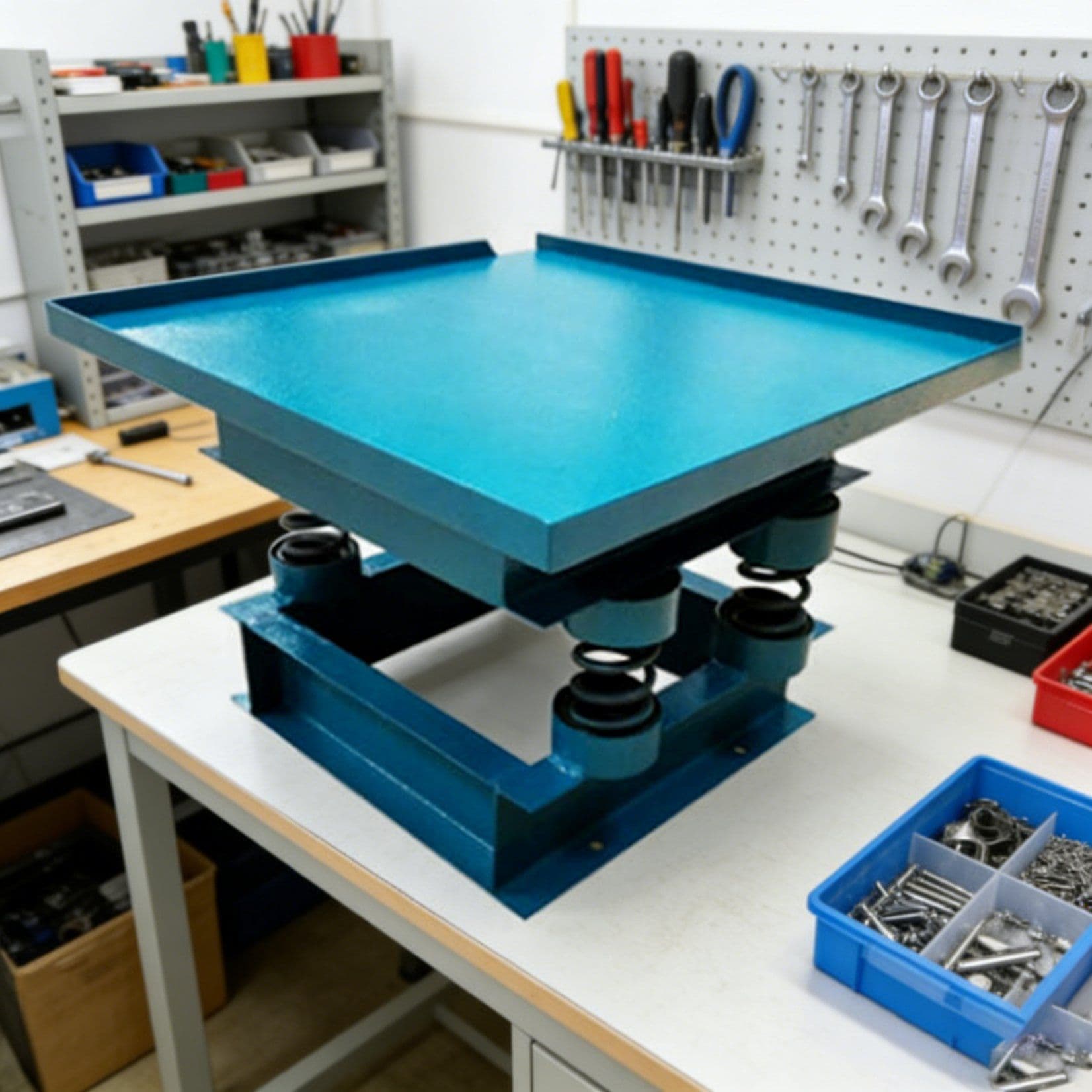
Concrete testing equipment
Dry or low-slump concrete control needs lab feedback; mix consistency is a production variable, not paperwork.
Quality-control equipment belongs in the line scope.Process references
Use the station descriptions to read bed preparation, casting, curing, cutting and lifting interfaces.
Open process referenceWeiler GmbHPoles, piles and columns equipmentOfficial manufacturer reference for spun pole and pile molds, concrete delivery, cage welding, centrifugal spinning, curing and handling scope.
Open process referenceTechnical references
Standards context for Hollow Core Slab Machine
These references identify where a technical review often starts. They are not a declaration of compliance, product approval or a replacement for the adopted project code.
Common rules for precast concrete products
Common requirements for precast concrete product standards, including basic performance and conformity-assessment context.
Use it as a common precast reference only. A product-specific standard and the project's adopted national rules take precedence.View standard recordLow-Relaxation, Seven-Wire Steel Strand for Prestressed Concrete
Seven-wire low-relaxation steel strand used in prestressed concrete applications.
Relevant to prestressed product systems; it does not specify the pile, slab, mold, lifting method or production equipment by itself.View standard recordBuilding Code Requirements for Structural Concrete
Structural concrete requirements for design and detailing in jurisdictions that adopt ACI 318.
A design-code reference, not a product approval or a substitute for the governing project code and engineer's drawings.View standard recordField notes
Hollow Core Slab Machine operating variables
A hollow core slab machine is only one part of the line: casting beds, prestressing, zero-slump concrete control, curing, cutting and lifting must be designed together.
Parameters to verify
- Slab profile and height
- Bed length
- Prestressing force
- Concrete workability window
Records and inputs
- Slab drawings
- Span and load requirements
- Bed length
- Prestressing strand plan
Failure modes to watch
- Local slab profile is not approved.
- Concrete mix cannot stay in the required dry window.
- Bed utilization is low.
Main types
- Extruder for dry, zero-slump mixes
- Slipformer for profile flexibility
- Wet-cast or low-output systems
- Saw cutting and bed cleaning equipment
Key specifications
- Slab profile and height
- Bed length
- Prestressing force
- Concrete workability window
- Wear parts
- Cutting and lifting system
Technical interface matrix
Read the product through application, geometry, production interface and acceptance evidence before comparing catalog data, drawings or technical offers.
| Area | Variables to check | Evidence normally needed | Interface risk |
|---|---|---|---|
| Application fit | Floor slabs; Roof slabs; Parking structures | Slab drawings; Span and load requirements | Local slab profile is not approved. |
| Type and geometry | Extruder for dry, zero-slump mixes; Slipformer for profile flexibility; Wet-cast or low-output systems; Saw cutting and bed cleaning equipment | Slab drawings; Span and load requirements; Bed length | Concrete mix cannot stay in the required dry window. |
| Production interface | Confirm local slab profiles and span tables.; Choose extruder or slipformer around mix control and profile needs.; Check bed, curing and cutting capacity together. | Bed length; Prestressing strand plan; Concrete mix data | Bed utilization is low. |
| Inspection and acceptance | Prestressing force; Concrete workability window; Wear parts; Cutting and lifting system | Prestressing strand plan; Concrete mix data; Target output per shift; Local slab profile is not approved. | Cutting capacity becomes the bottleneck. |
Technical selection variables
- Confirm local slab profiles and span tables.
- Choose extruder or slipformer around mix control and profile needs.
- Check bed, curing and cutting capacity together.
- Ask for wear-part life and service plan.
Compare hollow core production methods
The machine is only one decision. Bed length, prestressing, dry concrete control, cutting and lifting usually decide real plant output.
| Decision factor | Extruder | Slipformer | Evidence to inspect |
|---|---|---|---|
| Concrete mix | Usually needs very dry, stable zero-slump concrete | May allow profile flexibility but still needs tight mix control | Concrete mix tolerance windows and test-run requirements. |
| Product profile | Strong for standardized profiles and high output | Useful where profile range and adjustment matter | Local slab profile approval before machine selection. |
| Hidden scope | Beds, strands, saw, lifting clamps and wear parts | Beds, strands, saw, lifting clamps and profile tooling | Complete line scope, profile tooling and wear-part availability. |
Project interfaces and failure modes
- Selecting the machine before confirming slab standard.
- Underplanning prestressing beds.
- Ignoring dry-mix consistency and lab control.
Drawings and field data normally required
- Slab drawings
- Span and load requirements
- Bed length
- Prestressing strand plan
- Concrete mix data
- Target output per shift
Inspection and interface points
- Local slab profile is not approved.
- Concrete mix cannot stay in the required dry window.
- Bed utilization is low.
- Cutting capacity becomes the bottleneck.
- Wear parts are hard to source.
Requirement checklists and evidence
Use these scope-control briefs when preparing technical assumptions, commissioning scope and acceptance evidence.
FAQ
What should be checked before comparing hollow core slab machines?
Confirm the element type, production capacity, local standard, installation condition and maintenance capability first. Price comparison is weak when these basics are unclear.
Can PRECAST.WORLD organize technical evidence for this topic?
Yes. The goal is to organize production variables, drawings, photos, records and interface questions so the next technical discussion starts from evidence instead of assumptions.
Ask the technical desk about hollow core slab machine
Send product type, capacity target, standards, drawings, photos or quality issues. PRECAST.WORLD will turn them into clearer technical notes for the next discussion.